

Tips / Friday July 24, 2026
How To Get More Reviews on Your Website

Customer reviews can influence whether potential customers trust your business, buy your products, or leave your website. Today, most consumers check reviews before making a purchase, making customer feedback one of the most important trust signals online.
Besides improving credibility, reviews can also help your SEO by generating fresh content, increasing click-through rates, and strengthening local search visibility. However, many businesses struggle to collect reviews consistently because they make the process difficult or fail to ask at the right time.
In this guide, you will learn how to get more reviews on your website using practical, ethical, and SEO-friendly strategies that help build trust, improve conversions, and grow your online presence.
Why Are Reviews Crucial for Your Business?
While ten years ago, having a good-looking website was enough to have users’ undivided attention and stand out in front of the competition, that is the norm today. So, what can truly separate you from the pack is having many genuine reviews that honestly describe your business.
With 93% of users claiming that online reviews seriously impacted their decision, it’s truly not hard to imagine why any business owner should strive to maximize their review count. However, online reviews bring far more benefits than just increasing your website’s visibility.
They Are an Outstanding Social Proof
It may sound strange, but today, customers are far more likely to purchase a product or service if a stranger vouches for it. Before the boom of online sales, that sounded ludicrous. Today, however, 54.7% of users will read at least four reviews before purchasing. Another 44% would go through three or fewer reviews before buying. What this means for your business is that online reviews are one truly outstanding form of social proof, provided you generally have good reviews, of course.
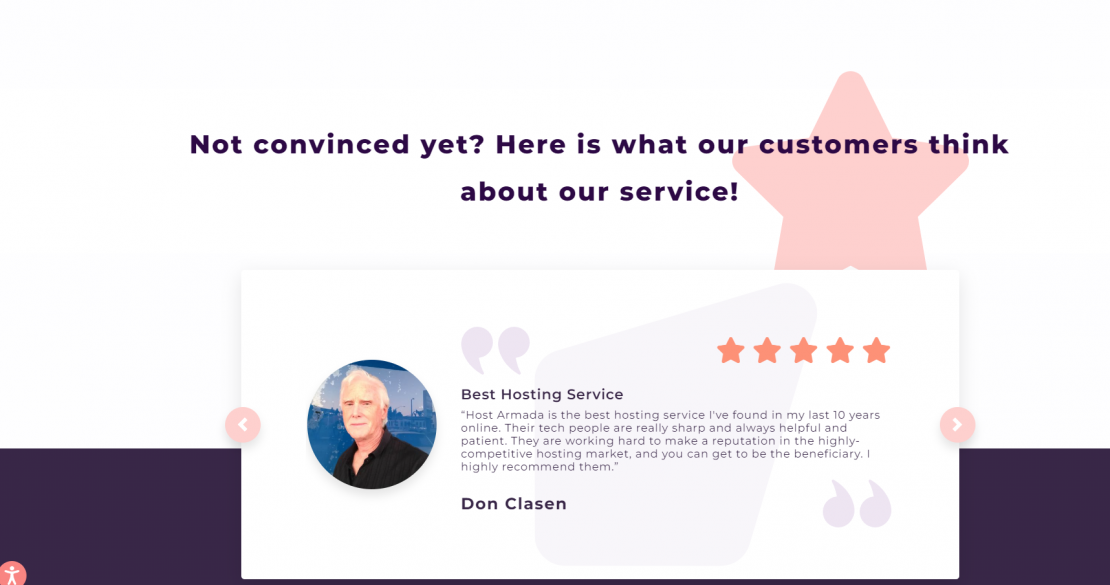
Naturally, this will generate more leads. In fact, about 9% of customers will call a business immediately after reading positive reviews, and many also prefer to explore video testimonials to gain a comprehensive understanding of the customer’s experience. Moreover, around 85% of people trust online reviews just as much as personal recommendations. Naturally, this social proof increases your overall credibility.
They Boost Your Credibility
Reviews will show your audience that you are honest with your product. Moreover, you are not afraid to address your customers’ product issues. In fact, they will trust you much more if you have some bad reviews in the mix. About 22% of customers would trust an all-5-star review brand.
On the other hand, if there are mixed reviews with lower scores, you will have the trust of nearly 66% of the audience. The presumption is that not everyone can be happy with a product or service, as you can’t, indeed, meet everyone’s expectations. Thus, if you only have 5-star reviews, it raises suspicion that you are either deleting negative reviews or that your reviews are fake.
They Gather Valuable Information
While bad reviews can be detrimental to your business, if you pay close attention to them, you can improve your product and, proverbially, turn a frown upside down. Naturally, this will cost you some extra effort, but if a considerable chunk of your customers face a problem, you can’t just pretend there is no such thing. It’s far better to take responsibility and ensure the problem is resolved.
They Have a Huge Impact on Sales
If you manage to get a good review score, this will instantly impact your sales. Statistics have shown that predominantly (but not entirely) positive reviews will increase your sales by 18% on average. Moreover, researchers have discovered that reviews work much better than any special discount or bonus. In fact, a good number of reviews is 50% more likely to motivate the buyer than a discount. So naturally, maintaining a high number of reviews will benefit your business greatly.
They Give a Huge SEO Boost
Your sales will increase significantly due to the rise in visits. As reviews indicate, you are trustworthy, Google will instantly hop on board and improve your website’s quality. As a business, Google aims to give its users the most valuable information they seek. So naturally, if your brand has many positive reviews, that’s a great indicator that people trust you, and Google will instantly push you up in its SERPs.
They Attract Attention
With better social proof, higher credibility, and better visibility, it’s not too complicated to determine that you will receive much more attention. That’s the power of social proof. The more reviews you get, the more attractive your brand will become. For example, about 64% of online shoppers agree that a trustworthy business should have at least 50 reviews. On the other hand, only 18% of customers would consider your business credible if you have fewer than 25 reviews. So, the more reviews you get, the better the results.
How Do You Get More Reviews?
So how do you get more reviews? Don’t worry. We at HostArmada are not only here to provide you with the fastest, safest, and most reliable hosting services. We are invested in your success just as much as you are, so we prepared a list of 11 foolproof ways to increase your review numbers.
1. Make It Effortless
The first step you must take to ensure your customers won’t hesitate to leave a review is to make it as easy as possible. This means you should only ask for what is needed for the review: the name and email address to verify it. Of course, the easier it is to leave a review, the more reviews you will have.
A good example is Samsung, which allows anyone to leave a review on any product. In the social proof section of their product page, they added a “Review this product” option right next to the current overall rating. In this example, all you need is a valid email for verification purposes and a nickname. We, however, advise asking for a name, as this will boost confidence in the reviews.
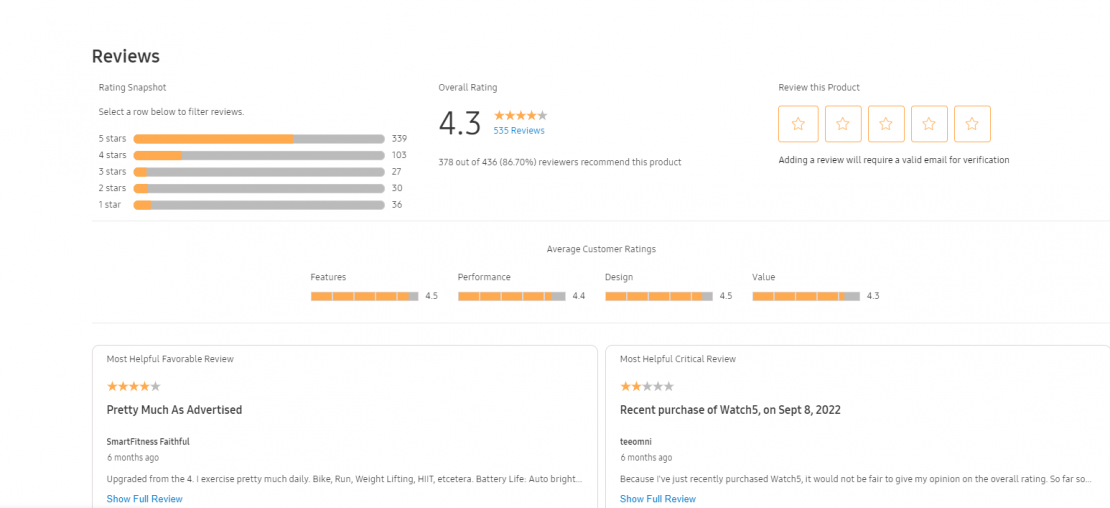
Depending on your business type, you can either ask for reviews on separate products or create a “reviews” section on your home page. There, people can leave their overall score for your brand. This is a much better solution if you offer only one or a few unique products bearing your brand’s name.
2. Remind People To Leave a Review at the Right Time
“Ask, and you shall receive.” This Bible verse from Matthew 7:7 is perfectly applicable to almost any marketing situation. In marketing, you can’t leave the customer guessing what you expect them to do. You need to tell them firmly and invitingly.
However, when it comes to reviews, you can’t just force people to write one. You need to ask them at the right moment. Unfortunately, many businesses make the frustrating mistake of asking customers to review their product upon receiving it. When it comes to services, there are two schools of thought. The first one preaches asking for a review immediately after receiving the service. They argue that this way, customers are more prone to leave a higher-rated review.
On the other hand, customers feel pressured and are likely to refuse to leave a review. Moreover, they haven’t had the time to experience the benefits of the service. For example, if you hired a business to fix your car, you can’t judge whether they did an excellent job before you drove for several dozen miles.
The second school of thought advises giving the customer some space and leaving them to enjoy the benefits of your service. The second option is mandatory when discussing products. You can’t expect someone to leave a review upon the product’s arrival. Thus, we suggest asking them to leave a review at least a week after buying the service or product. For some specific products, leave them a bit more time.
For example, if someone buys an inflatable swimming pool during Christmas, they will likely use it in the summer. In such cases, it’s best to create a list of customers who bought such products and send them a separate dedicated email at a more appropriate time. For the swimming pool, a midsummer is a good idea.
Needless to say, choosing the precise moment to ask your customers to leave a review will drastically increase your success rate, as if you ask them too soon, they might refuse. Still, if you ask them too late, they probably won’t bother or could have forgotten about the experience.
3. Add a Dedicated CTA
If you are trying to convince your customers to leave a review, a dedicated, well-designed CTA will do wonders. Just like with sales, optimizing your CTA to attract attention and make it persuasive enough will increase your review count.
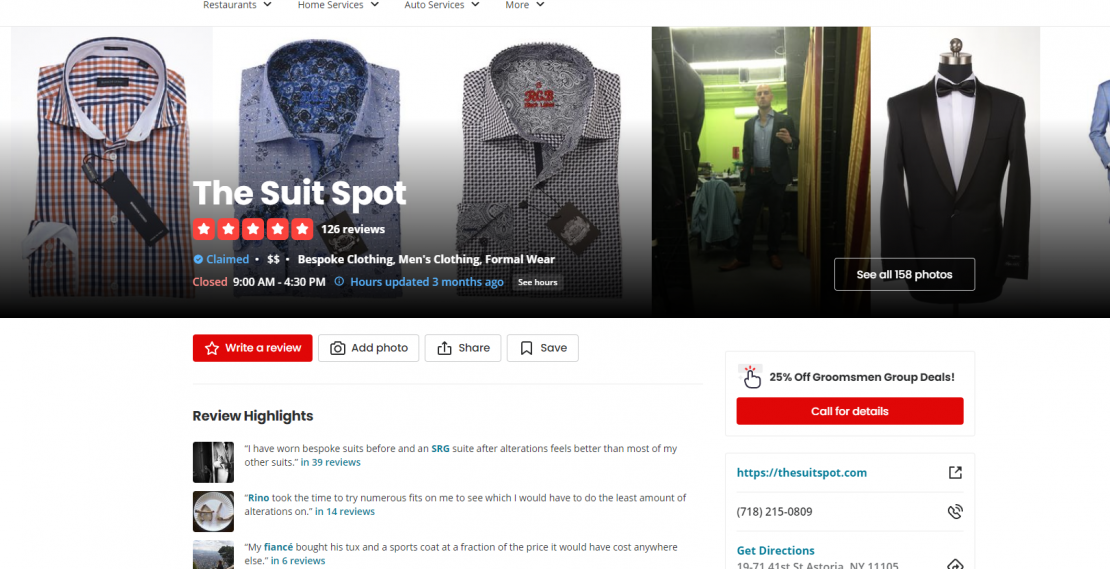
When creating your dedicated CTA button, we suggest using a different color to help it both stand out and differentiate it from your sales buttons. A good idea is to make it the same color as your score’s visual representation.
For example, if you use stars, make the CTA yellow. If you use blue dots, make it blue, etc. You can take a page from one of the business review website’s patriarchs – Yelp. Their CTA is the same color as the 5-star review visual and is positioned at the top, where it stands out.
4. Make Writing Reviews Mobile-Friendly
In this day and age, mobile-friendliness is crucial for your business. So, just as it is instrumental for your website to be easily accessible and navigable on smartphones and other devices, the same should hold for leaving reviews. Over 1.7 billion people check their email through their mobile phones. So, naturally, if you invite them via email to leave a review, they should be able to do it on their phone right there and then. However, if your reviews section is not mobile-friendly, they will likely ignore your request, as they will forget about it before getting to a PC.
Thankfully, if you are using WordPress and WooCommerce, they are entirely mobile-optimized, so you won’t have any problems. However, ensure your “reviews” page’s web design stays intact on smaller screens and retains its visually pleasing look.
5. Display Reviews on Your Website
This should go without saying. Reviews are the cornerstone of your social proof, so you must show them on your website. Moreover, it will significantly undermine your credibility if you ask someone to share their opinion about your product and then disregard it by not showing it on your webpage. Naturally, you can choose to highlight your top-rated reviews, but make sure to showcase the bad ones as well.
Even if you don’t collect reviews on your website, you should still provide a way for customers to access them. Thankfully, many WordPress plugins can integrate Social Media, Google, or other platform reviews of your brand into your website. For businesses that already collect feedback through Google, adding a Google Reviews widget is a convenient way to display those reviews directly on their website. This allows visitors to see recent customer experiences without leaving the page, strengthening social proof and helping potential customers feel more confident about the business. Third-party reviews are often far more trustworthy than those collected locally, as customers are typically concerned with censorship.
6. Be Careful With Review Moderation
Censorship is the worst idea when it comes to reviews. About two-thirds of people (62%) will purposefully avoid brands that censor online reviews and do not display critical reviews. Censoring your bad reviews instead of working to reduce them will ultimately do far more harm than the reviews themselves can. This will instantly hinder your credibility, significantly reduce your leads and sales, and ultimately destroy your Google website score. Most importantly, it will deter your customers from leaving reviews in the first place, even if they are good. Why would anyone waste their time writing a thoughtful review if you are going to edit it or simply ignore it?
Authenticity and transparency are crucial factors in users’ purchase decisions. So naturally, for retailers, censorship can be detrimental to their business. That includes fake bad reviews; it’s far better to address them and let your customers know they’re fake than to simply delete them. However, not every bad review is bound to be fake. Everyone makes mistakes, and owning them will elevate your authenticity and credibility.
7. Do Not Allow Any Fake Positive Reviews
The only thing worse than having censorship in your reviews section is having fake positive reviews there. 67% of consumers think fake reviews are a problem and will deter them from using the brand’s products or services. It stands to reason that if 93% of internet shoppers are adamant that reviews impact their decision and they can’t trust the authenticity of your reviews, this will stop them from purchasing. Naturally, you should avoid fake reviews at all costs. Still, if they are negative, you shouldn’t delete them, as it’s far better to call them out.
8. Implement Google’s Tools
With 81% of customers using Google reviews to assess local businesses, it’s easy to see why businesses should implement Google tools to get more reviews on the search engine. Submitting your business to Google and getting a Google My Business listing will go a long way toward this. That’s the most common place people look for your service, and if you gather enough reviews there, you will not only gain credibility and more leads but also rise in Google’s search results.
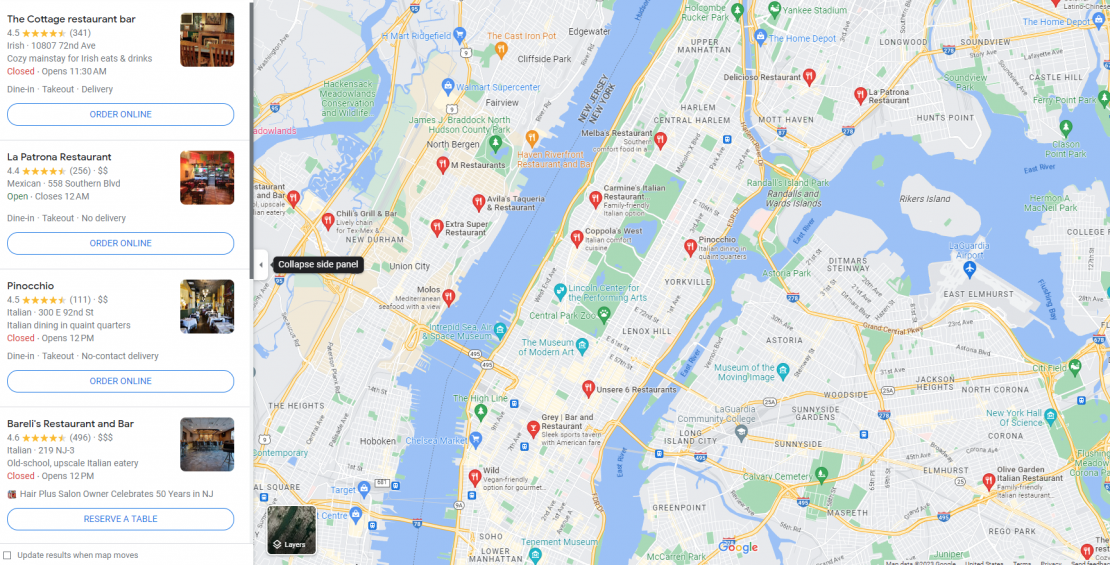
Another great idea is to add your business to Google Maps. This way, if you are a coffee shop, for example, and a person on the road is looking for a place to grab a quick cup, you and your reviews will stand out and be top of mind. Most importantly, they can leave a review through the same apps, significantly increasing the number of received reviews.
9. Implement Other Platforms
While Google, without a doubt, is the biggest review platform on the internet, accounting for 73% of all business reviews, it’s a good idea to add other platforms to the mix. Keep in mind that local reviews are a great way to increase your sales, but they account for only 12% of all reviews online. Moreover, it has little to do with generating leads and traffic.
If you want to be as visible as possible, we suggest adding three more review platforms to your portfolio. Yelp accounts for about 6% of all reviews worldwide and is especially helpful in the US. Facebook and TripAdvisor are the other two, each with 3% of the reviews. Of course, not all products and services can be implemented in TripAdvisor, for example, but still, make sure to add your business to as many of these platforms as possible. This way, you will make the whole process of leaving a review much more accessible.
10. Add a Benefit To Leaving a Review
Usually, if your business has already received several hundred reviews, getting more is a matter of time. However, if you are new in the industry and desperately want to get your first few reviews, a good idea is to add a benefit to reviews.
For example, you can offer a discount to anyone who leaves an honest review on your website. This is an excellent way to get a positive review, as those not impressed with your products will likely disregard the opportunity to purchase further from your store. Another way to get additional reviews is to make it a contest requirement. For example, you can offer a free gift to one person who leaves a review on your webpage.
These are a great way to start your review-gathering journey and will instantly give you relatively good feedback. Don’t worry about the bad feedback, though. It will come on its own.
11. Most Importantly: Respond to All Reviews
People love to be heard by brands. This way, the brand shows that it’s not a faceless corporation but is actually a partner. Regardless of whether the review is good or bad, you must respond. With good reviews, this is much easier, as all you need to do is thank the person and invite them to be your client again. However, things are a bit more complicated when it comes to bad reviews. Firstly, you need to respond quickly. 53% of consumers expect a fast response to negative reviews. Considering this, it’s genuinely astounding why 75% of businesses simply don’t respond to negative reviews. It’s far more practical to give your side of the story, to disprove the negative claims when they are wrong, and to own up to your mistake when they are true.
Moreover, by being open to conversation, your brand will encourage more customers to share their opinions and voice what they like and dislike about your product or service. This way, you can perfect your product or service and actively show your customers that their reviews are taken into consideration when improving it. This will inspire loyalty from your satisfied customers and leniency from the disappointed ones.
Having Many Reviews Is Not Enough
Getting reviews is relatively easy when you know where, when, and how to ask for them. Still, more than getting reviews is needed for your brand to be successful. You need to have predominantly good reviews that would overwhelm your critics.
Unfortunately, not all bad reviews are connected to problems with your products or service. Many bad reviews are related to the website’s poor design or speed. We at HostArmada have the perfect solution for the latter. Our fast, safe, and reliable hosting services will guarantee your website never experiences downtime, no matter how many customers you get. This will significantly reduce the number of negative reviews and ultimately help you increase your credibility, customer base, and revenue. Contact our team, and we will help you choose the most suitable plan for your needs.
FAQs
The best way to get more reviews on your website is to make the review process fast and simple. Ask customers for feedback shortly after a purchase or successful interaction, provide direct review links, optimize review forms for mobile users, and display existing reviews prominently on your website. Responding to reviews regularly can also encourage more customers to leave feedback.
Yes, but you should be careful about how you do it. Offering incentives in exchange for reviews is allowed on some platforms if you do not require customers to leave positive feedback. Always avoid fake reviews or manipulative practices, as they can damage trust and violate platform guidelines.
In most cases, no. Negative reviews can actually make your business appear more authentic and trustworthy. Instead of removing criticism, respond professionally, address the issue, and show potential customers that you value feedback and customer satisfaction.
Yes, customer reviews can support SEO in several ways. Reviews help generate fresh user-generated content, improve trust signals, increase click-through rates, and strengthen local SEO visibility. Google also considers review quantity, quality, and recency when ranking local business results.
