

Businesses / Monday March 16, 2026
How To Build a Winning Sales Strategy in 3 Phases

A sales strategy is the plan that defines how your business will attract customers and generate revenue. It determines who you sell to, what value you offer, and how your sales team will convert prospects into paying customers.
Without a clear strategy, sales efforts often become inconsistent and inefficient. A structured sales strategy helps businesses focus on the right audience, deliver the right message, and use the most effective channels to close deals.
In this guide, you will learn the three key phases of building a winning sales strategy. Understanding these phases will help you create a repeatable process for driving consistent sales and long-term business growth.
What’s a Sales Strategy?
A sales strategy is a clear plan that explains how a business will attract customers, sell its products or services, and generate revenue. It defines who the company will sell to, what value it offers, and how the sales team will approach potential customers.
In practical terms, a sales strategy outlines the target audience, sales channels, messaging, and sales process used to convert prospects into paying customers. It also establishes measurable goals and key performance indicators (KPIs) that help the business track progress and improve results.
As part of the broader business strategy, the purpose of a sales strategy is to provide the sales team with a structured, repeatable approach to generating revenue and supporting long-term business growth.
Why Do You Need a Sales Strategy?
A sales strategy ensures your sales efforts are focused, consistent, and data-driven rather than based on guesswork. Without a clear strategy, teams often rely on assumptions or individual instincts, leading to inconsistent results and wasted opportunities.
A defined strategy helps businesses identify the right audience and prioritize the prospects most likely to buy. Instead of promoting products to everyone, companies can concentrate their time, budget, and effort on customers who genuinely need their solution. This makes sales activities more efficient and improves overall conversion rates.
A strong sales strategy also helps refine your Unique Selling Proposition (USP): the specific value that differentiates your product or service from competitors. When your USP is clear, your messaging becomes more persuasive, and your brand stands out in the market.
Finally, a sales strategy creates consistency in how your company communicates and sells. Consistent messaging builds credibility and trust with customers, which is essential for long-term relationships and sustainable business growth.
In short, a sales strategy gives your sales team a structured, data-driven approach to generating revenue and scaling the business. The real challenge is not deciding whether you need one; it’s building a strategy that delivers measurable results.
Building such a strategy can be roughly divided into three phases.
Phase 1: Preparation
The first part of building your winning sales strategy is the most important. A mistake in this phase will render your entire strategy useless. So take your time and don’t rush through it. It’s essential to be punctual and data-oriented. In the preparation phase, you will gather a lot of information and have to make informed decisions about your product, business, and strategy. There are six key steps you need to take during this phase.
Define Your Sales Objectives
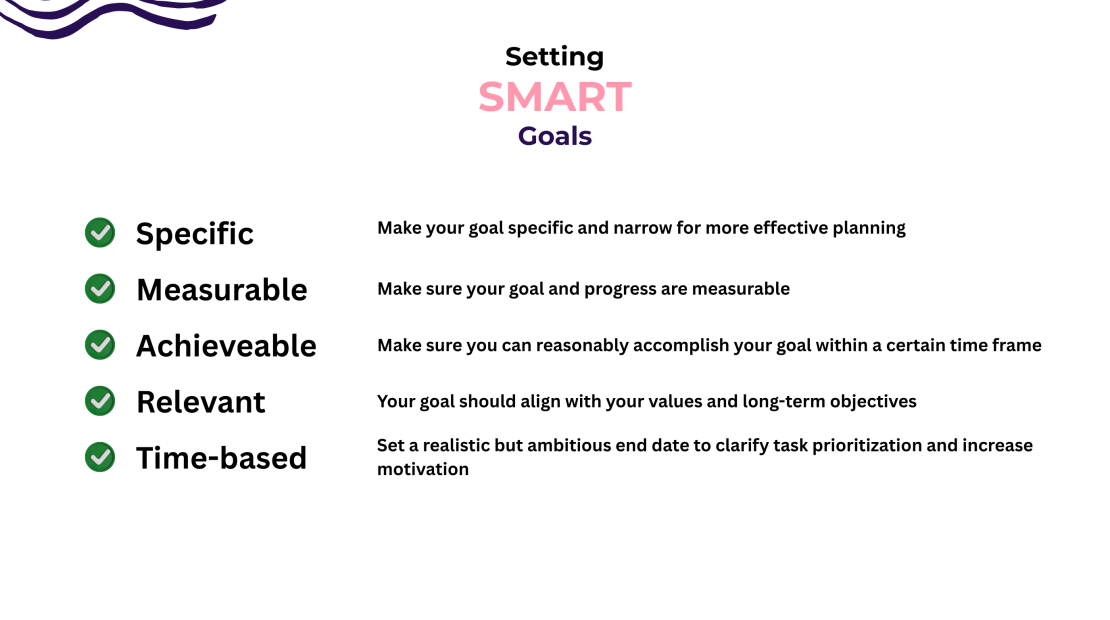
A precise objective will give you a clear picture of what you must do next. So, most sales experts prefer the SMART method. This means that your sales goals should be:
- Specific
- Measurable
- Achievable
- Realistic
- Time-based
Specificity is instrumental to your success, as it leaves no gray area or room for interpretation by the team. Provide a specific, measurable number to avoid confusion about the goal. This is what makes your goal measurable. You can pinpoint your progress at any given moment by adding quantifiable values.
To make your goal achievable and realistic, you must address many other factors outside the sales department’s scope. If you are a small business and you handle marketing, sales, and finances, this is somewhat easier, as you have a full understanding of your company’s resources and capabilities. However, if you have a bigger company with different departments, you must hold an all-hands-on-deck meeting. There, the different stakeholders can communicate directly and develop achievable plans for their own divisions.
From a sales perspective, the strategy should account for the marketing goals (i.e., how many leads they plan to provide), the company’s financial situation, and, naturally, the product department’s plans. For example, if the marketing team is planning on providing 300 leads, you can’t expect your team to make 400 sales. If finances are cut, and you can’t support eight salespeople, you should account for how many deals one salesperson can make daily. Finally, if the production department plans to produce 20 units of your product, you can’t expect your team to sell 25 units.
Most often, sales strategies have a one-year scope, so it is better to stick to that.
Identify Your Ideal Customer Profile
Once you have your goal, it’s time to look at those who will help you achieve it: the customers. After all, it’s them you need to impress.
Every product or service is based on a customer’s needs. Naturally, each product has a target audience that shares specific characteristics and problems. The more detailed these characteristics are, the tighter your audience will get. However, a narrower audience will allow you to customize your sales messaging precisely and increase your conversion rates.
So, even if you offer products or services for broad consumption, such as bed sheets, you must identify your Ideal Customer Profile (ICP). This will help you narrow down your audience and know whom to address.
Naturally, identifying your ICP is anything but easy. Start by examining market, search engine, and customer feedback trends. It would be helpful if they are your customers, but you can also tap into your competitor reviews to see what kind of people primarily communicate with them. Once you identify a specific group of people, ask yourself what their main problem is and whether your product fully solves it. This will help you improve your product and messaging in the later phases. Once you’ve identified your ICP, make sure to create a profile. Give them a name, specify their age, education level, and profession, and add a picture. This will help your sales team visualize who they are communicating with.
Analyze Your Competitors
Your next step is to analyze your competitor’s sales strategies. Naturally, you won’t have all the information, but through their messaging, you can deduce who they are targeting. Most importantly, you can identify some of their mistakes and avoid them. The best way to do that is to read their customer’s feedback and learn from their mistakes.
By analyzing all aspects of your competitors’ strategy, you can find their strengths and weaknesses. This will help you find a niche where you can thrive rather than compete with others where they are strongest.
Define Your Unique Selling Proposition
All of the work you’ve done so far leads to probably the most crucial decision you will have to make in your entire sales strategy. This is the one that can make or break your business. Your Unique Selling Proposition (USP) is what gives you an edge over your competitors. It’s the thing that should speak loudest to your customers.
Naturally, listing your product’s features is far from enough to create a winning USP. Instead, focus on the benefits the product or service will bring to your customers. So, for example, if you are offering cordless vacuums, highlighting their engines, container sizes, and battery types won’t do the trick. You need to show the benefits. Mentioning that your customers won’t have to deal with cables or that they can clean their apartment three times with a single charge is far more appealing. So, find that extra feature in your product that helps customers in ways no other product can. Focus on the benefits rather than the features, and make it memorable and compelling.
Set a Numerical Definition of Success
Setting KPIs or specific metrics used to measure performance and efficiency is crucial for monitoring your success and fixing problems on the go. This will give you an unembellished view of your team’s performance. More importantly, it will show you where they need to improve. For example, if you set a KPI of 10% annual sales revenue and, in the first quarter, the increase is just over 2%, you must adjust your strategy.
KPIs can be revenue-oriented, conversion-oriented, sales-stream-oriented, or customer satisfaction-oriented. The revenue KPIs are most often a percentage higher than last year’s. For example, if you made 1 million and want a 10% increase this year, you should have earned 1.1 million at the end of the year.
The conversion rate has much to do with the quality of the marketing team’s leads. So, setting a higher conversion rate often requires going into a tighter niche or updating your sales messaging. Regardless, this involves the marketing team as well, since they provide the leads, and it’s their job to forward only quality leads.
Another type of KPI can be directed towards increasing income streams. For example, if you enter a new market, you may set a specific goal and KPI for this market alone. For example, if you are a US company but you’ve just branched out to the EU, you may set a specific goal to retain US sales and focus on expanding your market share in the EU.
Finally, we have customer satisfaction KPIs. They most often target the repeat-purchase rate, which shows the percentage of your customers who buy from you again.
Invest in a Motivated Sales Team
The only way to grow your business is to have your team’s dedication to the task. Now, many brilliant managers will insist that money is not everything, but money is the main pillar of your relationship with your employees. Offering a bonus upon reaching annual sales goals is a great way to motivate them. This is a small investment that’s practically paying for itself. If the sales team brings in higher revenues, they will get a cut. If you are tight on money, you can offer other incentives, such as additional vacation days for the best salesperson, a special retreat for them and their family, or anything else to boost morale.
Most importantly, don’t blame the sales team alone if they aren’t meeting their monthly quota. Instead, find out the problem and fix it without raising your voice or threatening anyone with termination. No one works well with a gun against their head.
Sometimes, investing in a motivated sales team is just giving them the proper respect they deserve and building an environment of trust and cooperation.
Phase 2: Analysis
After you are done building the infrastructure within, it’s time to plan where you will implement your strategy.
Segment Your Market
First and foremost, you must understand that your niche can be segmented even further, no matter how tight it is. Yes, you will target everyone in your niche, but segmenting your market by characteristics such as age, sex, demographics, and specific needs can help you personalize your sales messages even better. Imagine you are selling women’s scarves. This is already a pretty tight niche. Still, you can segment your audience further by age and location. For example, the younger generation may like brighter colors, while the older generation may prefer more stylish dyes.
Moreover, you can target your customers based on the occasion on which they will wear the scarf. For example, they will need a more formal scarf for a wedding. However, if they need one for leisure time, walking the dog, or just keeping warm at home, they might go for a more colorful or playful dye.
Thus, segmenting your market will allow you to create better, more targeted messaging. Naturally, how you will divide your market niche depends on your product and the data you’ve collected.
Choose the Proper Sales Channels
Once you know your market niches, you must choose the proper sales channels to contact them. For example, older people are far more likely to watch television, while younger generations are primarily on social media. Analyzing your target audience will help you determine which communication channels to use. Naturally, you can always allocate some resources to pushing through a new channel and creating a new income stream. That all depends on your vision and financial capabilities.
Create Various Sales Messages
Now that you’ve established your customer segments and channels, it’s time to build your messaging. Creating a sales message is a long and difficult process that involves extensive testing. Don’t expect to hit the jackpot on your very first try. Depending on the channel, the message will have various components, and each must be tested. A/B testing is probably the best way to go. Write about 10 sales copies, make 10 pictures, create 10 videos with different messages, and try which one will bring the most revenue. Analyze the results and identify the common factors that drive your customers to click the Buy button. Note that there is no such thing as a perfect copy. Conversion rates of 100% are impossible. So, don’t go for perfection. Go for “good enough.”
Perfect Your Sales Process
While building your strategy, don’t forget to check if you can improve your sales process. Your sales process is a step-by-step guide that leads your sales team to closing deals. Look at the steps they are taking, the milestones, and the key actions set in this process, and determine whether you can optimize them. In this regard, your team’s feedback is invaluable, as they are the ones doing the selling. So, be open to suggestions from your team and test them out in the field to see if they are good enough.
When you are done perfecting your sales process, it’s time to implement your strategy.
Phase 3: Implementation
Many newbies falsely believe their work is done once they set their strategy. That couldn’t be further from the truth. Just as the market is fluid and every aspect is in constant motion, so should your sales strategy be. So, here are four crucial things you should be doing while the strategy is being implemented.
Monitor and Measure Progress
Monitoring your sales team’s progress doesn’t mean you should stick your head in the sand, looking to see if they’re working. That’s what the KPIs are for. You should keep tabs on your sales team’s success weekly and track patterns.
For example, if the sales team makes 12 on Monday but only 2 on Tuesday and Friday, you need to identify the cause of this anomaly. If that recurs each week, you can even take advantage of it and focus your resources on the day with the most sales while cutting back on the bad days. Measuring your sales team’s performance will give you invaluable information on how your product is selling. This will be of great help when you update your strategy or create your next one.
Implement Customer Relationship Protocols
Don’t be fooled that once you’ve finalized a sale, your job is done. If you aspire to loyal, returning customers, you need stellar customer relationship protocols. These will define the rules of conduct post-sale. Though they are not the seller’s job, they are still within the realm of the sales team, as they are the ones who communicate with the client. In B2C transactions, that’s not a huge deal, but in B2B sales, maintaining a relationship between the salesperson and the customer is crucial.
So, make sure to have personalized follow-up sessions, excellent customer support, and always reply to feedback, regardless of whether it is good or not.
Encourage Feedback
Speaking of feedback, just replying is not enough. You must actively invite your customers to leave reviews and comments on your website or a third-party website. Reviews are the single most persuasive argument in your sales arsenal, so don’t disregard them. Even bad reviews are essential, as they show where to improve.
Review and Update Your Strategy
Building a successful, winning sales strategy is an ongoing process. You can’t just drop a piece of paper on your sales team’s desk and expect them to do the job. You need to actively review and update your strategy to respond to changing market trends.
For example, imagine if you were a masseuse. In late 2019, you set your 2020 sales strategy and started implementing it on the first day of the new year. In March, however, the COVID-19 crisis brought everything to a halt. If you hadn’t responded, you’d waste resources, as other factors outside your control changed the market.
While this is an extreme example, marketing changes happen ever so often. So, reviewing and updating your strategy every quarter is a good idea. This way, you will have enough data on whether the plan is working and where you can improve it. Naturally, your plan could be running smoothly, and you may not need any changes. But you can’t know that without properly reviewing all the collected data and your team’s feedback.
Sales Strategy Checklist
Before launching or revising your sales strategy, use the following checklist to ensure the core elements are in place:
- Define SMART sales objectives
- Identify your Ideal Customer Profile (ICP)
- Analyze competitors and market positioning
- Define your Unique Selling Proposition (USP)
- Choose the most effective sales channels
- Test and refine sales messaging
- Monitor key performance indicators (KPIs)
- Review and adjust the strategy quarterly
Example Sales Strategy KPIs
Key Performance Indicators (KPIs) help measure whether your sales strategy is producing the expected results. Tracking the right metrics allows businesses to make data-driven decisions and adjust their strategy when necessary.
- Revenue Growth: One of the most direct indicators of sales performance. Monitoring revenue growth over time helps determine whether the strategy is producing sustainable business expansion.
- Lead-To-Customer Conversion Rate: This metric shows how effectively your sales funnel converts prospects into paying customers. A low conversion rate may indicate messaging issues, poor targeting, or an inefficient sales process.
- Repeat Purchase Rate: Customer retention is often more profitable than acquisition. Monitoring how many customers return for additional purchases helps evaluate the strength of customer relationships.
- Average Deal Size: This KPI measures the typical value of each completed sale. Increasing the average deal size can significantly impact overall revenue without increasing the number of customers.
- Customer Acquisition Cost (CAC): CAC measures the cost of acquiring a new customer through marketing and sales activities. Comparing CAC with customer lifetime value helps determine whether your strategy is financially sustainable.
Common Sales Strategy Mistakes to Avoid
Even well-designed sales strategies can fail if certain common mistakes are overlooked. Avoiding these pitfalls can significantly improve the effectiveness of your sales planning.
Targeting Too Broad an Audience
Trying to sell to everyone often results in messaging that resonates with no one. Clearly defining your Ideal Customer Profile (ICP) allows your team to focus on prospects who are most likely to convert and generate long-term value.
Targeting Too Broad an Audience
Many businesses emphasize product features rather than the real outcomes customers care about. A strong sales message explains how a product solves a specific problem or improves the customer’s situation.
Using Channels Without Audience Validation
Not every sales channel works for every audience. Before investing in advertising, social platforms, or outreach strategies, validate that your target customers actually use those channels and respond to them.
Not Reviewing KPIs Regularly
Sales strategies must evolve with the market. If performance metrics are not reviewed regularly, teams may continue using ineffective tactics without realizing it.
Building a Sales Strategy Takes Continuous Improvement
Building a successful sales strategy is not easy, and it doesn’t become any easier, regardless of how many you’ve made. The market is way too fluid to stick to any winning practices. Following the frame we gave you is one of the few constants to help you navigate the turbulent waters of sales strategies. Another constant is your need for fast, reliable, and secure web hosting so your sales team can intercept leads and prevent them from bouncing on the first touch with your website.
Thus, HostArmada is a must for any growing business. We offer high-speed hosting solutions, 99.9% guaranteed uptime, and state-of-the-art security for your client’s data. Check out our plans and choose the one that best fits your strategy. If you use your website as a sales stream, you may consider VPS Cloud Web hosting. So, do your business a favor: let us deal with your website’s hosting while your sales team is busy implementing your winning sales strategy.
FAQs
A sales strategy defines the overall approach to reaching customers and generating revenue, including target audiences, value propositions, and sales channels. A sales plan, on the other hand, focuses on the specific actions, timelines, and targets needed to execute that strategy.
A strong sales strategy typically includes clear sales objectives, an identified ideal customer profile (ICP), a unique selling proposition (USP), defined sales channels, consistent messaging, and measurable KPIs to track performance.
Most businesses should review their sales strategy at least quarterly. Regular reviews allow teams to adjust to market changes, analyze performance data, and refine their approach based on what is working and what is not.
The success of a sales strategy is measured using key performance indicators (KPIs) such as revenue growth, lead-to-customer conversion rate, customer acquisition cost (CAC), average deal size, and customer retention rates. These metrics help determine whether the strategy is delivering sustainable business growth.
