

Ecommerce / Monday March 9, 2026
Own Ecommerce Website vs Amazon: Which Is Better for Long-Term Growth?

Yes, building your own ecommerce website is worth it if you want full control over your brand, customer relationships, and long-term profit margins. However, marketplaces like Amazon offer faster exposure, built-in traffic, and a much easier way to start selling online.
This creates a common dilemma for many retailers: should you rely on Amazon’s massive marketplace, or invest in your own online store? Each option has clear advantages and trade-offs depending on your business goals, budget, and long-term strategy.
In this article, we’ll compare selling on Amazon vs running your own ecommerce website, explore the pros and cons of each approach, and help you decide which option makes the most sense for your business.
Advantages of Having Your Own Website
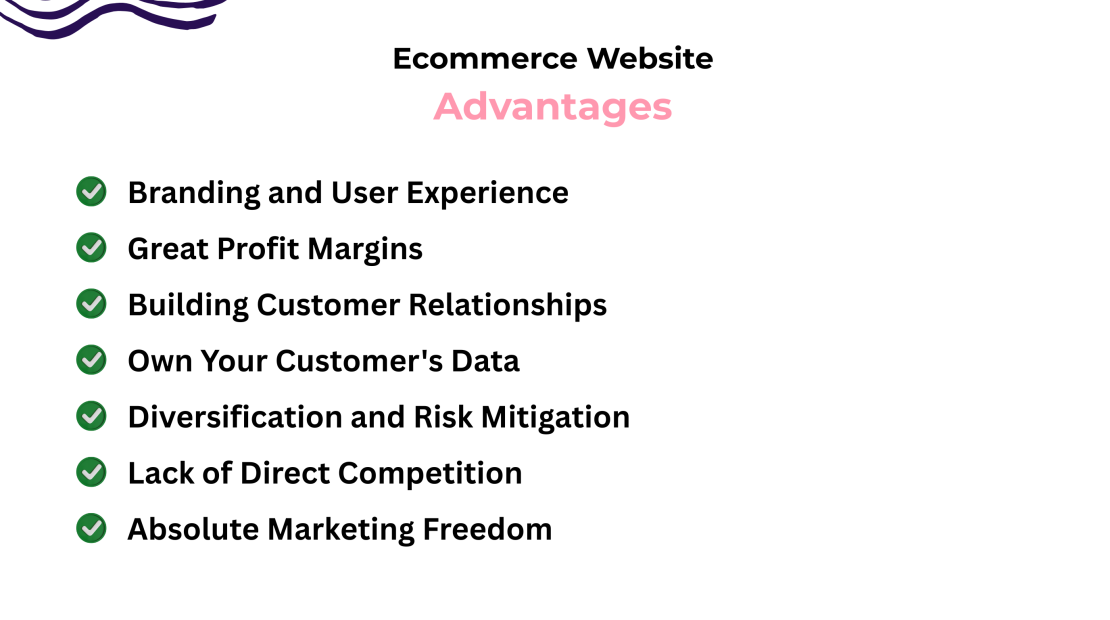
Having Jeff Bezos as a competitor is clearly not the most relaxing thought. Still, Bezos is not a competitor. He’s just a businessman with a vastly popular marketplace. Amazon may seem overwhelming at first glance, but having your own website also has immense benefits.
1. Branding and User Experience
Building your own brand is, without a doubt, the biggest advantage of having your own website over Amazon. Though not official, Amazon discourages sellers from building brands, as people may start looking for their products outside the marketplace. This spells a loss of profits for the giant corporation. However, you must have a recognizable brand to build a loyal customer base. Loyal customers have a significant impact on your image, the evolution of your user experience, and your marketing as well.
For example, if you sell funny baseball caps on Amazon, and someone asks one of your customers where they bought it, they’d undoubtedly answer “Amazon.” On the other hand, if they visit your website, they will surely mention your brand name. But more on the marketing in a bit.
The branding options are limitless when you operate in your own online space. You can create, personalize, and design layouts to your heart’s content. As you build your brand identity, you will become more famous and better respected, and why not be an authority in your industry – something you can’t do as an Amazon retailer?
2. Great Profit Margins
This is another huge advantage of operating alone against Amazon’s might. While Amazon does give you some serious outreach, your margins are stretched quite thin due to various factors. The most common one is the competition. If you produce a quality product yourself, it will cost much more than the marketplace’s average. Naturally, most customers will follow the rule of the lowest price. Though convenience is the top reason customers come to Amazon, bargains are a close second. In fact, 82% of Amazon buyers say price is an essential factor when considering a product. So, you must follow the lowest price, regardless of the quality.
Moreover, Amazon subjects its retailers to various fees, including referral, fulfillment, and storage fees.
Naturally, if you have a high-quality product, having your own website will allow you not only to price it fairly but also to reduce additional fees along the way. Thus, your margins will rise, and your profits will soar, allowing you to increase the quality of your product rather than cutting corners to keep production costs down.
3. Building Customer Relationships
When you are operating under Amazon, you don’t have clients. Amazon does. Naturally, you do receive some feedback, but there is no real customer relationship beyond the bad ones when they return a product, and you must refund their money. There is no connection.
Having your own website allows you to communicate directly with your customers. You can give them complimentary gifts, have a much more personalized sales tactic, receive feedback, and enjoy the good rather than only suffer the bad.
Needless to say, having a relationship with your customers is a gold mine for expanding your business through word-of-mouth marketing, offering promotions, and loyalty discounts.
But perhaps the most significant advantage is that you will have the customer’s data. This is integral if you want to better your service and products, allowing you to grow faster.
4. Own Your Customer’s Data
Owning your customers’ data is crucial for your rapid growth. This can help you target your audience more effectively, understand their behavior, and fix problems with your products or services. When you work with Amazon, the corporation owns the customer data, and you can only access bits and pieces of it. Naturally, this limits your ability to understand your customers and better your marketing and sales tactics.
For example, if 90% of your customers bought your product after spending less than 3 seconds on your product page, you can cut the written content, add more pictures, and make the buy button easier to use. On the other hand, this must push you to explore why anyone would buy a product without first knowing about it.
5. Diversification and Risk Mitigation
Running a business means being prepared for any eventuality. Counting only on Amazon as your sole profit stream is a recipe for disaster. They can suspend your account for any number of reasons. Even if you manage to restore it, it will take time, leaving you hanging in Limbo. Moreover, you risk getting on Amazon’s bad side at any moment, as they are free to change their policies as they please at a moment’s notice.
Having your own website prevents all of that. First, you can diversify your sales channels and profit streams as you see fit.
For example, you can sell your products through YouTube ads, Google Ads, Facebook Ads, and TikTok ads. Thus, if any of these bans your account for any reason, you still have additional streams of income to count on. Not to mention SEO and offline marketing. They will undoubtedly give you an additional boost.
6. Lack of Direct Competition
As Amazon is a marketplace, it prioritizes customers’ needs. Thus, whenever they show your product, they also show a bunch of other similar products or even substitutions. Moreover, if you offer a main product and additional accessories, Amazon will show as many diverse accessories as possible. This means the customer may buy them from a different vendor.
For example, if you offer mountain bikes, people will likely want to buy additional gear to go with them. So, instead of getting their lights, locks, and other accessories that usually accompany a bike from you, they can go for a different vendor. Either way, they will receive them through Amazon at the same time. If you have your own website, that’s not entirely so. Usually, people will go for the convenience of ordering in bulk rather than cutting costs at one place, only to pay for delivery from multiple websites.
So, for example, if you are selling a vacuum cleaner, when people buy the product, they are likely to buy additional filters, attachments, and other accessories from you rather than search elsewhere.
7. Absolute Marketing Freedom
Perhaps the biggest benefit of building your own website is the complete marketing freedom it offers. Amazon is a template-driven website, with all landing pages the same. There are a few deviations from the norm. When it comes to your own website, you can build and change your landing page as you see fit. The one-size-fits-all method of platforms like Amazon is impractical from a marketing standpoint, as each product targets a different audience, and each audience has different content needs. Naturally, some products need much more explanation, while others rely predominantly on pictures.
Moreover, Amazon’s design downplays the emotional aspect of decision-making.
For example, if you want to buy a summer dress, a sterile landing page won’t bring the emotional response needed for an impulsive purchase. On the other hand, if you surround that dress with a beach background, summer fruits, and cocktails, this will certainly put the customer in a much better buying mood. They won’t be buying a dress anymore. They will be buying a vision of themselves wearing that dress.
While the advantages of owning your own website are pretty alluring, one should consider the disadvantages as well before rushing in.
Disadvantages of Having Your Own Website
While having your own website is definitely extremely beneficial, you shouldn’t jump into such an endeavor without considering the downsides. And when it comes to building your website brand, there are quite a few downsides compared to Amazon.
1. High Initial Cost
Maintaining your own website means you need to consider the costs involved. The initial cost is significantly higher than what you’d pay for a place on Amazon. You will have to purchase a domain and an outstanding hosting service and hire designers if you don’t want to go through the time-consuming process of building a website and optimizing it to perfection on your own. Thanks to WordPress, having a genuinely good website nowadays is not that hard. Still, it will require some knowledge of web design essentials. So, before you go for a website over Amazon, consider your budget and whether you can afford to build your own website.
2. Time-Consuming
Taking care of a website, optimizing it, and creating various landing pages for your products and marketing campaigns will take time. A lot of it, in fact. Sure, you can use templates, but the SEO efforts on their own are quite time-consuming. Not to mention every other aspect of owning your own ecommerce website. So, if you were hoping for a good work/life balance, you should reconsider. At least in the beginning, until the business becomes profitable and self-sustaining, you will have to give it your all.
3. Limited Exposure
Being on your own means you must find your customers on your own as well. Amazon has a huge customer base, which is definitely alluring. On the other hand, if you go to a website, you will have minimal exposure. Getting some clients will depend entirely on your SEO efforts and paid ads. Naturally, in the very beginning, this will be excruciatingly hard. Still, with the right SEO strategy and good marketing, you can build up your audience in less than a year.
4. Higher Marketing Costs
As it has become clear, marketing will be the sole provider of clients initially. Naturally, with limited outreach and no access to the vast Amazon audience, you will have to invest in marketing campaigns across various channels. This will cost you a lot. Be sure to have a significant ad budget in the first few months, as each user visiting your website will cost you. Still, in the long run, once you’ve gained some traction and popularity, this will reverse completely, and your marketing budget will become much smaller, or even disappear in rare cases.
5. Payment and Security Concerns
While you will benefit from owning your customers’ data, you will be responsible for protecting it. Naturally, you will have to find a secure way to collect and store data, which will cost you some extra money. Moreover, you are responsible for the payment methods, gateways, and all essentials. So, cutting corners on security is the worst idea you could have, as it can put you in serious legal trouble.
6. Infrastructure, Logistics, and Customer Service
One of the biggest benefits of Amazon is that they handle your entire infrastructure, logistics, and customer service. Naturally, if you go on your own, you will have to take over these tasks. You must consider storage, logistics, and the accompanying infrastructure to help you deliver your products. On the other hand, you will also have to establish a customer service center. This won’t be easy. Especially if you want to do everything on your own.
Still, regardless of the downsides, having your own website is the perfect choice for many retailers. But so is Amazon, so let’s have a look at what they have to offer.
Advantages of Using Amazon
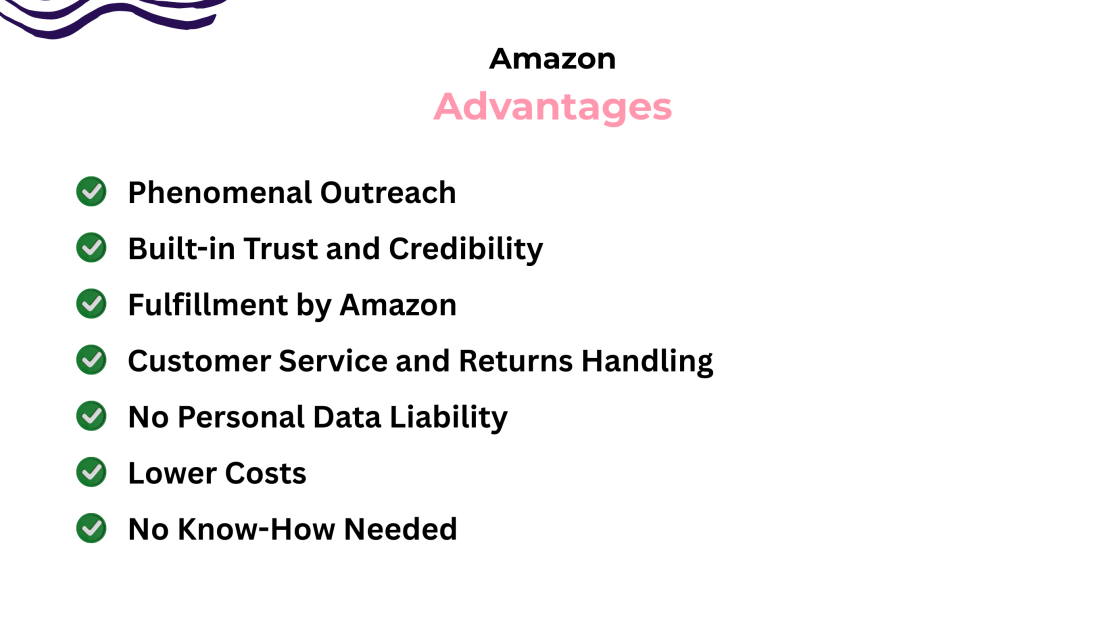
Naturally, we can’t ignore the truth: Amazon is a godsend for millions of small retailers who just want to sell their products without building a huge brand. And, of course, Amazon has its undeniable advantages.
1. Phenomenal Outreach
With nearly $514 billion in sales in 2022 and a 37% market share in the US, your service speaks volumes. So, while Amazon’s policies are somewhat restrictive, there can be no doubt about its brilliant services.
Moreover, with 2.3 billion monthly visitors, Jeff Bezos’s marketplace is preferred by many small-time retailers. So, naturally, if you go with creating an Amazon-based operation, you will benefit from this immense exposure. Of course, no eCommerce website in the world can drive such a huge audience. But then again, Amazon offers everything, so you should really be on the lookout for what’s trending on the site rather than blindly following the numbers.
For example, if you are offering highly specific medical equipment with predominantly B2B implementation, Amazon won’t do you any good. Despite 2.2 billion viewers, the likelihood that none of them will be interested in your product is significant. All in all, Amazon is not a great place for B2B sales, despite the website’s credibility.
2. Built-in Trust and Credibility
Speaking of credibility, Amazon is truly a champion in this aspect. If you are a new retailer, building up trust will probably be your toughest challenge. However, Amazon has earned the trust of customers worldwide. Naturally, selling your products on the platform will be much easier, regardless of how new you are to the market. That’s why many brand-new retailers prefer Amazon as a place to start.
3. Fulfillment by Amazon
One of the standout advantages of selling on Amazon is the use of Fulfillment by Amazon (FBA). FBA is a comprehensive service that streamlines the entire order fulfillment process. The corporation provides warehousing, where you can send your products. This reduces your costs for maintaining infrastructure and physical inventory of your products. Amazon takes care of storing your products in its secure and climate-controlled warehouses.
Moreover, Amazon will handle the packaging and shipping, so you will save not only money but also time.
4. Customer Service and Returns Handling
In addition to the fulfillment center, you will have access to Amazon’s extremely well-organized customer service program. This will save you a ton of money, as maintaining 24/7 customer service is extremely expensive. Not to mention handling the returns. The company will take care of every returned item, inspect it, and even restock it or resell it. This hassle-free returns process contributes to higher customer satisfaction and fewer headaches for you.
5. No Personal Data Liability
Handling other people’s personal data is a nightmare. Once you start collecting it, you are responsible for its storage and security. Naturally, this takes a lot of effort and money. But since Amazon is the one that collects the information when you use it, it is liable for its protection. This removes the burden of storing and destroying personal data upon request.
While this may sound like a minor advantage at first glance, once you start dealing with other people’s personal data, you will learn the immense stress it brings.
6. Lower Costs
Since you won’t be paying for domains, hosting, designers, and anything related to building your own business and establishing yourself on the market, you will be able to save that money. Naturally, using Amazon is not free, but it’s way cheaper than the alternative. Thus, if you are starting on a tight budget, you might be better off with Amazon, as short-budgeting your eCommerce website is definitely not a recipe for success.
7. No Know-How Needed
Finally, Amazon is the easy solution. You don’t need any know-how; you don’t have to invest time and money in a website. All you need to do is follow some simple instructions, and you are in business. The whole process is straightforward, and you can literally start within a few hours. This is essentially the “quick start” button for retailers.
Disadvantages of Using Amazon
Of course, the grass is not always greener with Amazon. All of the website benefits we’ve mentioned are Amazon’s downsides. Naturally, there are some additional ones as well.
1. Lower Margins
We’ve explained the lower margins in detail, but it’s worth mentioning them again. The biggest problem here is that lower profits come from taxes and fees, and from the entire ecosystem, where Amazon constantly bombards your customers with your competitors’ products. Adding cheaper substitutes or copies of your product to the mix also cuts your ROI. So, while you will save money on infrastructure, marketing, and shipping costs, these savings will have to cover your initial losses and tiny margins.
2. Limited Brand Control
The worst downside of Amazon is that it steals your thunder. When you have an outstanding product, people will remember they’ve got it from Amazon. The packaging will have Amazon’s logo, the email confirmations will be from Amazon, and the entire correspondence will be with the giant corporation. This is a massive hit to your overall brand exposure. Moreover, it can hinder your efforts to grow and become independent over time. Not to mention that building your audience on Amazon will make you entirely dependent on them.
3. Amazon Dependence
Yes, Amazon is much like the Mafia. Once you get in, you rarely get out since the entire business model favors Amazon’s brand over yours. This makes you entirely dependent on their traffic. Moreover, once you start using their convenient Fulfillment centers, you relinquish control over your stock and build a sound marketing strategy based on your inventory, sales, and shipment plans.
Not to mention that while Amazon offers an easy international expansion, it limits you geographically to the places where it delivers. For example, if you want to sell products to Eastern Europe, Asia, the Middle East, or Africa, you need to check where Amazon’s fulfillment centers are. This will show if they can deliver your products to certain countries and at what cost.
4. Lack of Control Over Customer Experiences
Worst of all, you have no control over the customer experience. You can receive bad grades because of a rude customer support agent, a damaged package, or even a crude delivery guy. If you have access to your customers and you’ve built a relationship with them, you can mitigate this disastrous fallout. But since you are entirely dependent on Amazon, you can only hope Amazon does its best to resolve the issue. More often than not, however, the 1-star reviews are about your product, which leads to a bad score.
5. Limited Customer Data Access
Your dependency on Amazon goes beyond products. While it’s convenient not to be liable for your customers’ personal data, it limits your ability to make informed decisions about your marketing strategy and product development. This makes it harder for you to go on your own, as you will lose your entire audience once you leave Amazon. You will have to start from scratch.
6. Getting Copied
Another significant downside of Amazon is that it is being copied. Well, that’s a problem all over the internet, of course. Still, Amazon gives access to people making cheap imitations to get to your customers and offer them a similar product, only much cheaper. Since Amazon limits your branding, you can’t convey that using alternatives won’t lead to the same outcome you offer. Thus, many of your customers will simply remain disappointed with the product altogether.
7. Lack of Brand Personality
The lack of a brand personality is truly Amazon’s worst downside. A brand personality opens many doors, builds trust, and turns ordinary customers into loyal ones. Moreover, the brand personality is what helps you grow. With Amazon, you have capped growth and can never expand beyond, as others will quickly start taking a cut of the action.
Regardless of the downsides, millions of retailers have chosen Amazon for a reason. So, whether you choose it or not depends entirely on your ambitions.
Is It Worth Investing in Your Own Website When There Is Amazon?
If your priority is quick market entry, built-in traffic, and easier logistics, selling on Amazon can be the faster path. However, if you want complete control over your brand, pricing, customer data, and long-term business value, investing in your own ecommerce website is the stronger strategy.
Amazon is the place to go if you are after quick, relatively easy retail profits. This is perfect if you want to resell items from other marketplaces, such as Alibaba or AliExpress. Moreover, if you produce and sell tiny, commonly used items that can’t be branded, like smartwatch bands, then again, Amazon is a great way to sell your product.
On the other hand, if you offer unique, high-quality, or relatively expensive products, investing in your website will give you far more opportunities to grow. It all depends on your vision. Having your website will provide significant benefits in the long run, but it will be harder to develop and get it running initially. So, if you are in for the long run and you’d like to build an empire, a brand that’s more than just a retailer, but a name in the ecommerce world, then having a website is mandatory.
Of course, just having a website won’t do the trick. You need to have a fast, reliable, and secure website. This is where we come in. HostArmada is a cloud-based hosting service provider that guarantees lightning-fast speed, 99.9% uptime, and robust security measures against server breaches. Check out our plans and find the one that best suits you. If you have any doubts, just contact our team, and we will happily assist you with choosing the right package.
FAQs
Amazon is better for quick exposure and easier setup because the marketplace already has millions of active buyers. However, an independent eCommerce website gives you full control over branding, pricing, and customer relationships.
Yes. Many businesses use Amazon to gain visibility while also running their own website to build their brand and maintain direct relationships with customers.
The biggest risks include lower profit margins due to fees, limited access to customer data, strong competition, and dependence on Amazon’s policies and algorithms.
Owning customer data allows you to build long-term relationships through email marketing, personalized offers, and repeat purchases. When you sell only on marketplaces, this data usually remains controlled by the platform.
