

SEO / Saturday May 16, 2026
Why Your Bounce Rate Is High and How to Reduce It

A high bounce rate usually means visitors leave your website without interacting further because the page loads too slowly, fails to match search intent, provides a poor user experience, or lacks clear next steps. Improving bounce rate starts with faster loading speeds, better content, stronger CTAs, and easier navigation.
Bounce rate is an important engagement metric because it helps measure whether visitors find your website useful and relevant. While some pages naturally have higher bounce rates than others, consistently high bounce rates can signal technical issues, weak content, or poor user experience.
In this guide, we’ll explain the most common causes of a high bounce rate, how bounce rate differs across industries, and the best ways to improve engagement and keep visitors on your website longer.
What Is a Bounce Rate?
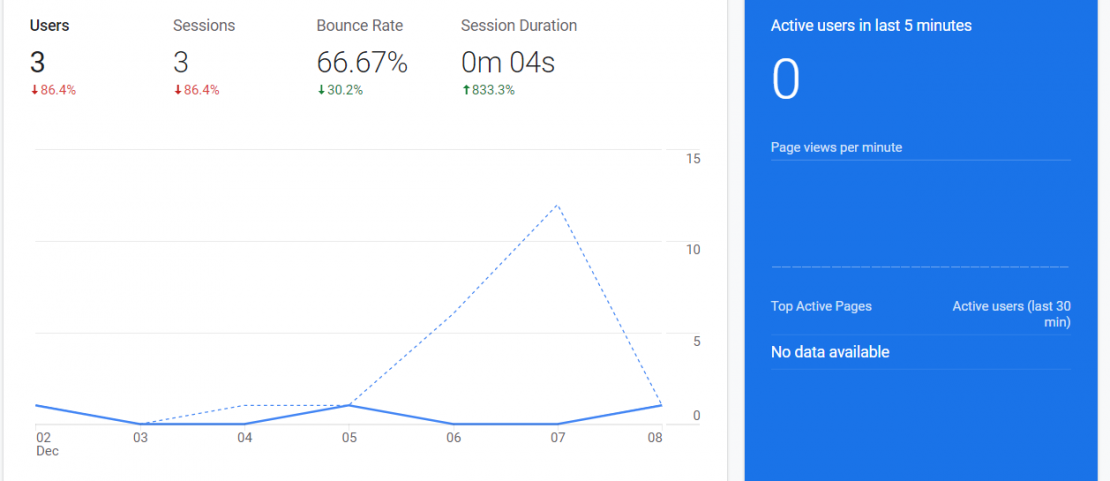
Bounce rate is the percentage of people who leave your website after visiting a single page. In practice, this means a person has visited your website and left without interacting. Your bounce rate shows the quality of your website and its usability. Moreover, it may indicate a problem with your website. The bounce rate can also indicate issues with your ad. So just ignoring this metric is definitely not in your best interest.
Furthermore, bounce rates are closely linked to your SEO efforts. You will struggle to rank on Google’s top page if you have a high bounce rate. Despite Google not using Google Analytics data in its algorithm, it still follows users from its search engine. If they return quickly, it would mean they haven’t found what they were looking for, which would hinder your usability score.
Naturally, these all mean a lower bounce rate would spell better results, more conversions, higher profits, and lower CPC, thanks to the better ranking. So, you should aim to be somewhere around the average or even below it.
What Are the Averages?
As you can imagine, bounce rate varies by industry. For example, the bounce rate would be very high for a website that provides just information without monetization. On the other hand, a website that offers a product or a service should have a much lower bounce rate.
Needless to say, you can’t eliminate the bounce rate altogether. Theoretically, if you create the perfect ad, which converts every single person who reaches your website, you can get a 0% Bounce rate. However, in practice, that’s impossible. So the averages are very important numbers, as they will determine where the Goldilocks zone is.
The Average for an E-Commerce Website
E-commerce ads are usually targeted at a hot audience that is ready to finalize a purchase. So naturally, the bounce rate on such landing pages is significantly lower. On average, the bounce rate is somewhere around 20-40%.

B2B Websites
If your target audience is another business, you should expect, once again, a somewhat lower Bounce rate, as most often, when companies look for something, they are interested in finalizing the deal. It’s much rarer for such clients just to browse. Still, a bounce rate of 25-50% is acceptable.
Lead Gen Pages
Lead generation campaigns also enjoy relatively high interest with a somewhat lower bounce rate. Nevertheless, it’s normal for at least one-third of your visitors to leave the webpage without interacting.
Non-E-Commerce Websites With Content
Those content-driven websites are targeting a bit cooler audience. Thus, naturally, not all of them are ready to buy. A bounce rate between 35-60% is nothing to worry about in such cases.
Blog and News-Driven Websites
These types of pages usually serve an educational or informational purpose and rarely aim to result in a sale. But, naturally, people looking for information would come in, get what they need, and leave. So on such pages, a bounce rate of up to 90% is something completely normal and would mean you actually accomplished your goal perfectly.
Is a Low Bounce Rate Always Good?
Having barely any bounce rate is also not something you should celebrate. As we previously mentioned, a too-low bounce rate might indicate issues with your Google Analytics setup. If you have a 0% bounce rate, you certainly have a problem. You either messed up with the website setup, or no one is actually visiting your page. A healthy 20% bounce rate is the bare minimum you should expect, regardless of your page’s goal.
There are several places where you might have messed up the Google Analytics implementation on your website. Duplicated analytics code in your header is the most common, as it’s easy to paste the code twice if you are not using a WordPress plugin. However, if you are using WordPress, the problem might be caused by another plugin that prevents Google Analytics from working correctly. Usually, you will get a notification.
Incorrectly implemented event tracking is also common if you don’t have experience with configuring your GA.
Nevertheless, a low bounce rate can be achieved through a specific website design that prevents visitors from leaving without taking at least one additional action. This includes redirects to other web pages. However, we wouldn’t recommend using such tactics, as that’s not particularly user-friendly. Forcing users to do anything is usually a bad idea.
How To Set up Your Own Baseline?
As you might imagine, using others’ averages is not the best way to track your progress, so a better tactic may be to create your own baseline. This is especially true if you are presenting a unique service or product. Each product has its own bounce rate, as whether people are ready to make a purchase is dictated by many factors.
To set up an accurate baseline, you will need information about your potential customers’ level of interest. This would mean you will have to go blind for a time and set a baseline based on that. Luckily for you, the average figures for your page’s purpose will suffice at this stage. After you’ve gone through several campaigns in which you are using the basic average as a set point, you can determine your own average. Naturally, you will need to collect the data and analyze it.
Once you have a baseline, you can start improving your content to decrease your bounce rate.
If your bounce rate increases or you can’t reach the industry average, you might start to panic. However, remember that panic never solves anything, and you might as well just check where the problem might be.
Why Is Your Bounce Rate So Damn High?
High bounce rates are worse than having some problems with your setup. While not getting the right metrics via Google Analytics is terrible for future decision-making, it does not hinder your conversion rate and profits. On the other hand, a high bounce rate will reduce your traffic, your sales, and your revenue. Moreover, it will take a toll on your SEO efforts.
The good news is that a high bounce rate is easily fixable. But before fixing the problem, you first need to define it. Several issues with your webpage or ad can cause a high bounce rate.
Slow loading speed
Speed is crucial for your website, as people lose interest quite quickly. According to researchers, each second of delay reduces your customers by 16%. On average, websites with a 2-second load time have a bounce rate of 9% due to page load speed. On the other hand, a page that loads in 5 seconds has a bounce rate of more than 38% due to its speed. This shows that people don’t waste time waiting for your website to come around. Instead, they spend their money elsewhere. While website loading speed often depends on the website setup, displayed content, and the technology stack used, you can definitely benefit from the speed optimizations offered by your web hosting provider as well. Fortunately, here at HostArmada, loading speed issues caused by the web hosting service will not affect your website!
Content With Low Quality
Content is king. Yes, we tend to repeat this often, but only because it’s true. Having bad-quality content is a recipe for failure, especially when you’ve hyped your website in the promoted ad. When your users come to a website with low-quality pictures, content with grammar or spelling mistakes, and questionable design, they tend to lose confidence in your product and leave without even trying to understand what you are offering.
Errors
The only thing worse than bad content is no content at all. Promoting a page only for the URL to lead to a 404 error page is what keeps UX experts and QA teams awake at night. Most often, users who stumble upon such a result would leave immediately, never to return. The bounce rate is not the only problem with missing pages, as they would instantly bring down your SEO score, leading to additional loss of traffic, customers, and revenues.

Targeting the Wrong Audience
Just like you won’t go into a gardening shop when you are looking for a beer, the same way, the wrong audience won’t stay on your website if you don’t offer what they need. Naturally, this separation should be done much earlier by your ad’s copy. However, if your copy is not great and you haven’t implemented the right keywords in your content and metadata, you might attract an audience with little or nothing to do with your product or service. Naturally, they won’t stay around for long, and your bounce rate will skyrocket.
Bad Backlinks
In today’s world, our content is anything but private. Anyone can share a link to your website for various reasons. Maybe they are trying to associate with you because you are an authority figure in your industry, or they just found some information exciting and are sharing you as the source. Regardless, you must know who is sharing your website and why. From time to time, low-quality websites may send you traffic that’s not interested in your product, leaving you without further interaction with your website. Naturally, this would lead to an influx in your bounce rate by no fault of your own.
Responsive Design
With 92.1% of users regularly using mobile devices to surf the internet, it’s not hard to imagine why this would be a problem. Whether it’s a mistake or you just decided to skip making your design interactive, your results will suffer. The best thing about this problem is that you can pinpoint it quite easily. For example, if your page performs well on desktop but has a high bounce rate on mobile, you can easily deduce the most likely issue.
No CTA
If you haven’t put a Call to Action on your page, what are the users supposed to do next? Having an audience that reads between the lines and understands hints is wishful thinking. You must tell your audience exactly what to do 100% of the time. Whatever your goal, just add a simple button at the bottom of your page, and don’t let them guess what’s next. Make sure, however, that your CTA is leading to the correct place, as mistakes would instantly ruin your dependability.
How to improve your bounce rate
Improving your bounce rate is almost always one truly effortless task. All you need is to stay focused while preparing your landing page and address any problems promptly. So, let’s go through the solutions to all the issues we listed above.
Increase your loading speed
The best way to increase your website’s speed is by finding a reliable, fast, and secure hosting service provider. We love it when we can be the perfect solution to a problem. Host Armada has outstanding offers that are tailored to your needs. We guarantee fast page load times, significantly reducing your bounce rate caused by slow page speed.
Invest Time in Your Content
Content is king for a reason. You can’t just copy and paste anything from the internet and expect great results. On the contrary, with bad content, you are inviting bad results. Invest some time and money into your content. Learn a bit more about writing for your audience, and if you have the budget, hire a professional content writer to help you achieve your goals. Each landing page segment has a specific target, and customizing it with your audience and goals in mind will get much better results, not only for your bounce rate.
Stay on Top of Errors
Errors happen. After all, we are human, and we tend to make mistakes. So just in case, make sure you create a fun, lighthearted Error 404 page that will lead your audience to a different page on your website, where they might find a suitable substitute. At the same time, you should regularly check your Google Search Console (GSC) for broken links and problems with your page. Once you see there is such a mistake, fix it immediately, or if there is no quick fix, stop the running ad, as it will do much more harm than good.
Double-Check Keywords and the Targeted Audience
Having 20,000 visitors per day is amazing. Having them from the wrong place is a waste of money since they will all leave without ever consuming your content. For example, if you offer cowboy hats in LA and, for some reason, you target Dallas Cowboys fans, you won’t have much success. You will probably get several thousand visits and just as many bounces. So, follow your Google Analytics and GSC closely to stay on top of such small but crucial mistakes.
Remove Bad Links
GSC will help you with this one as well. That’s the tool you can use to find out who’s sharing your links and what anchor text they are using. You can go even a step further and check the quality of the website that shares your link. If the website’s quality is poor or it sends you poor leads, just sever the link.
Be Mobile-Friendly
It’s really not that hard to make your design interactive. Most modern website builders do this automatically, but even if you have a custom web design, making it interactive is a piece of cake. Your first step, however, would be to see if your website is mobile-friendly. Go to the GSC mobile-friendliness test and see if your page needs improvements on this end.
Add CTA
We doubt that this solution is a surprise. Adding a CTA will improve your bounce rates significantly, as people will no longer wonder what’s next. Creating a simple CTA will bring you a long way, and all you need is just a compelling copy that will seduce your audience to take the next step in their journey.
Improve Your General User Experience
If none of the above helps, the problem lies in the user experience you provide on your website. The solution: invest in better UX for your web pages.
Conclusion and our advice
Bounce rate is a very important metric to measure. No matter what measuring tool you will use, inspecting your website’s bounce rate at least once a month is a must. A high bounce rate is alarming, and the sooner you locate and fix the cause, the faster your page ranking in various Search Engines will improve. So adding this to your monthly website maintenance routine is definitely a good idea.
Our advice when you face such a situation is to investigate. Since you have the issue defined, you must dig deeper to see where that rabbit hole leads. Often, identifying the root cause of the high bounce rate reveals many issues with your landing pages or ad copy, so investing time and effort is the best thing you can do!
FAQs
Not always. Some pages naturally have higher bounce rates, but consistently high bounce rates can indicate poor user experience or irrelevant content.
Common causes include slow loading speeds, poor mobile optimization, weak content, technical errors, and unclear calls to action.
You can reduce bounce rate by improving website speed, matching search intent, optimizing mobile usability, and adding clearer CTAs and internal links.
