

Design / Sunday May 17, 2026
The 5 Pillars of Web Design

The five pillars of web design are content, flow, usability, aesthetics, and SEO. A successful website needs all five because strong content explains your value, clear flow guides visitors toward action, usability removes friction, aesthetics builds trust, and SEO helps users find your website online. When these elements work together, websites become easier to navigate, more engaging, and more effective at converting visitors into customers.
Modern web design is no longer only about visual appeal. Visitors expect fast-loading pages, intuitive navigation, mobile-friendly layouts, and useful information that answers their questions quickly. Businesses that focus on these pillars create websites that improve user experience, increase search visibility, and support long-term growth.
Understanding these core principles can help you build a website that performs better for both users and search engines.
The Content Pillar
You have probably already heard the saying, “Content is King,” hundreds of times. In fact, content is more like a God when it comes to web design. It’s the main pillar that holds everything together. It’s the backbone of your website, and if anything can make or break your online presence, it’s the content. So naturally, we will give it some extra attention, as it’s an essential part of your website.
What Is Content?
Every little piece of information on your website is considered content. Whether it’s written, an image, or a video, content has one important job – to relay information to the audience.
For example, if you offer T-shirts, you’d want to convey information about the materials used, prices, sizes, colors, and others. Still, that’s far from the only information you’d want to relay.
Your first job is to inspire trust in your brand. This can be done via your brand logo, some social proof, what benefits your product will bring to the customer, and why your price is the best on the market. Finally, you’d want to communicate your desire to sell your product (or service). This is most efficiently done with a Call to Action – CTA component.
Content is a vast topic that deserves an article of its own. Still, for now, you need to remember that content is a written or visual representation of the information you want to relay to your audience to push them to take a specific action.
Types of Content
There are many types of content you can add to your website. Needless to say, what you will add is based on your personal preferences and what your audience likes. Still, there are some must-haves.
- Web Copy: It’s the text you will put in your header, front page, and footer. However, there is a fine difference between content and copy. The copy is entirely written information that aims to achieve a predetermined action from the recipient. In contrast, content is usually more focused on relaying free information without the specific goal of attaining a subsequent action. That’s where Blog posts come into play.
- Blog posts: Blog posts on their own have only one goal: brand awareness. They are typically aimed at a more general public, which you would want to transform into a hot audience. Still, in your blog posts, you need to address problems that people face within your community and industry and their solutions. This way, you establish yourself as an authority figure in the industry, which indirectly benefits your sales.
- Images: Images are crucial for any website. Often, they are far more important than text. On average, people stay 52 seconds on a website before leaving. This means you have under a minute to capture their attention. Moreover, when looking for a solution, people most often have at least ten open tabs with probable solutions, so your window of opportunity to impress them is even lower. This is where pictures come in. They can relay information much faster than any text. Moreover, people tend to read with reluctance, especially when looking for a quick fix, and are not yet determined to give you a chance at your solution. So high-quality, well-selected pictures are a must if you want to keep your audience on your page above the average time.
- Video: Video is another content solution that offers quick and easily digestible information. Videos are perfect for presenting a product and its benefits. Still, the video should be professionally made and done with class. A poorly made video will do much more harm than a good video will do good.
- Infographics: The perfect mix of images and text. They represent key points you want to relay to your audience with visual representation and as little text as possible. Still, they are most efficient when talking about specific data and not about testimonials, feelings, and other abstract information.
Each content type has its own job. However, needless to say, the entire point of having a website is to draw more customers. So, to transform your audience into leads, all your efforts should point to a specific, predetermined action. This is called the flow.
The Flow Pillar
Your website should be like a river. Your audience may come through many streams, be it organic traffic, search engines (yes, there is a small difference between the two), social media, PPC campaigns, offline ads, and everything in between. All these streams should join into one big river representing your website. That doesn’t mean you’ve done it once the leads have your information on their browser. No, whatever it is, the end goal is to monetize as many of these leads as possible.

To do so, you need to find the right flow for your product and audience. There is no single recipe that can work for all. Each audience is unique and is based on its motivation.
For example, those looking for dancing shoes are typically not a cold audience. On the contrary, they are a very hot audience ready to buy. For someone to look at shoes designed explicitly for a particular dance, this means they are already dancing, and they want to take the next step in making their hobby even more comfortable.
On the other hand, if the product is winter tires, while that’s once again a specific product, the niche is not particularly narrow. Most people look for winter tires without knowing the first thing about them. Moreover, in some countries, winter tires are required by law, so a car owner has no choice in buying such. Thus, not all of your audience will be familiar with how to choose winter tires, the differences between the different types, and so on. So you will have to go a bit further back in making this warm audience into a hot one.
The flow on its own should follow only one rule: add extra value when needed. Each step before the buy button should be related to your audience’s question after reading the previous section. Finally, the river should lead to the predetermined action you’ve created. Whether it’s “Buy,” “Subscribe,” or “Contact us,” it should be the end of the flow. Well, in all honesty, the end goal should be for your conversing audience members to come back to the top of the river and make another ride down the stream, but that’s more a marketing necessity rather than a design one.
The Usability Pillar
Naturally, if you want your audience to get a smooth ride down your flow, you need to ensure there are no bumps along the way. This is where usability comes into play. Every website should be user-friendly. That’s not just an SEO whim but common sense. As previously mentioned, a person will spend roughly 52 seconds on your website. This should be enough time for them to find whatever they are looking for easily. Whether it’s social proof, authority proof, product description, or delivery options, all of this should be one click away. This means your website should have one stellar navigation based on more than logic. It should be based on data. A 2021 study shows 61% of users leave websites because of bad navigation. Furthermore, 73.1% point out that they leave a website when the interface is non-responsive.

This comes to show just how much your website depends on its usability.
To ensure your website’s perfect usability, all you need to do is follow the four golden rules:
Make It Simple
Your website should be anything but complicated. Your brand website is not the place to show off your coding skills. Instead, it’s a place where you want to meet your potential customers and make their experience as pleasant as possible. This means they shouldn’t feel any stress while browsing through your website. For example, while pop-up CTA statistically increase conversion rates, especially when talking about email subscriptions, overusing them will negatively affect your usability. Browsing through your website should be effortless and fun.
Make It Available
Your website should always be on. On average, a minute of downtime costs around $5,600. Naturally, this depends on the size of your business, but still, 37% of small and mid-sized businesses have reported a loss of customers due to downtime on their websites. Furthermore, about half of all website outages are a direct result of server failure. A good solution is to get a fast, secure, and stable hosting service provider. This way, you can prevent unnecessary downtime caused by factors that are unrelated to you.
Moreover, the bane of any website is broken links. They are a massive generator of customer mistrust, so make sure you regularly check your links.
Keep Navigation Simple
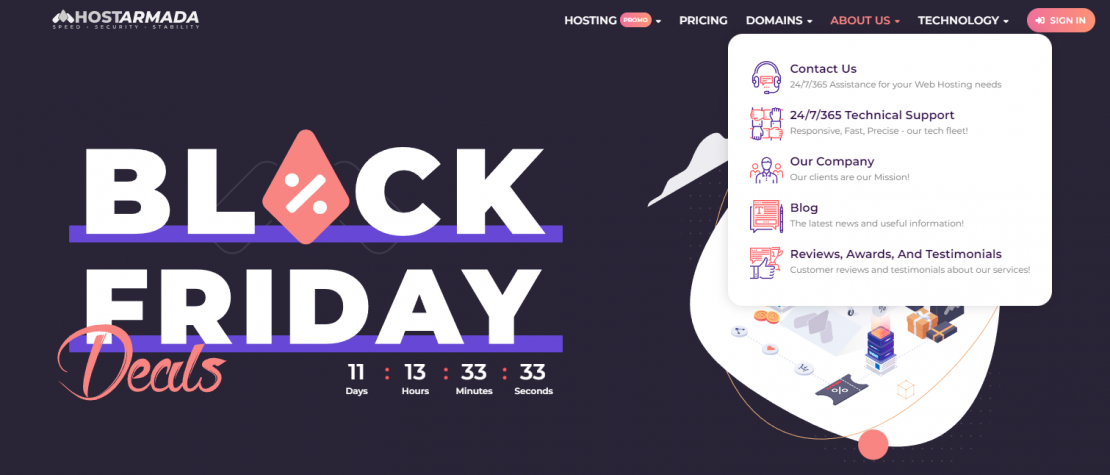
Navigation should be effortless. You should have a clear page hierarchy, and users should find anything they are looking for without wondering where it might be.
Interactivity
Your website should be not only a place where people might get some information but a place where they can entertain themselves while learning more about what you offer. Thus, an interactive design will bring you a long way. It will keep the audience’s attention and convince them you are the best solution to their problem.
The Aesthetics Pillar
Being user-friendly is not enough to retain your audience on your website. Naturally, you need to make it visually pleasing. This is easier said than done. Usually, it’s a nightmare to make aesthetic designs responsive and visually stunning across all formats. With 54% of internet traffic coming from mobile phones, you should make the extra effort to make your design responsive and perfect for all types of screens.
Professional web design in New York often focuses on blending aesthetics with brand identity to ensure consistency and visual appeal across all digital channels.
Moreover, you must retain your brand identity across all media, as your brand is your face across the internet. So your visuals, color palettes, typography, and designs should be identical across all media, be it your website, social media, offline, or anywhere else. Thus, creating a visually stunning website that’s both eye-pleasing and easily redistributed across other media is a particularly hard task. Still, it is one you must do to attract more customers and inspire confidence in your ability to solve their problems.
The SEO Pillar
Making your website SEO-friendly is not a topic we can cover in just a few sentences. Still, it’s one of the cornerstones of web design. And how could it be otherwise, with 69% of website traffic coming from search engines? So naturally, a good web design strictly follows the best SEO practices.
Firstly, make sure your home page’s metatags are all in order. Moreover, make sure your tag hierarchy perfectly aligns with your messaging. This means that your main message in the header should be in an H1 tag, while subheadings should be in H2 tags.
Furthermore, you should add some main keywords in your meta description, make it unique, and simultaneously tell users what you offer and why they should choose you. This should be done in about 150 characters, so being precise is crucial.
Keep your content fresh, and make sure all your links are accessible. Finally, ensure that users can easily share everything you create across all social media. That’s the 2022 equivalent of mouth-to-mouth advertising, so making it as straightforward as possible will bring you huge benefits.
Key Takeaways
Having a website is not enough in today’s commercial world. You need to make sure your website has the right pillars on which it can be built. All of them are way too vast topics to cover fully here. Still, in a nutshell, you need brilliant content, perfect usability, a good website flow, and stunning visuals complemented by interactive elements. All of that should be SEO-friendly. No one said that creating the ideal website would be easy. Still, having all the basics in mind is a good start.
FAQs
The five pillars of web design are content, flow, usability, aesthetics, and SEO. Together, these elements help websites communicate clearly, guide users effectively, provide a positive experience, create visual trust, and improve visibility in search engines.
Usability is important because it helps visitors navigate a website easily and complete actions without frustration. Simple navigation, fast loading speed, mobile responsiveness, and accessible layouts improve user experience and increase conversions.
Web design affects SEO by influencing page speed, mobile usability, navigation structure, internal linking, and content organization. Search engines favor websites that are fast, easy to use, and structured with clear headings and optimized metadata.
A successful website design combines clear messaging, intuitive navigation, strong visual consistency, fast performance, and SEO best practices. Websites that balance user experience with functionality are more likely to engage visitors and achieve business goals.
