

Web Hosting / Monday March 2, 2026
Top 10 Web Hosting Trends To Look for in 2026

Choosing the right hosting provider means prioritizing security, cloud scalability, AI-driven optimization, and long-term reliability. Web hosting is no longer just about putting your website online. It directly affects your speed, uptime, SEO performance, and data protection.
You can build a stunning website with compelling copy and great products, but without strong hosting infrastructure, performance bottlenecks and security risks will hold you back. The hosting industry has evolved rapidly over the past decade, pushing providers to innovate with better cloud architecture, stronger security layers, managed services, and smarter automation.
And the pace isn’t slowing down.
From multi-cloud strategies and Cloud VPS adoption to serverless architecture, AI-powered protection, and sustainability initiatives, hosting is becoming more sophisticated and more competitive than ever.
So what trends actually matter right now and how should they influence your hosting decision? Let’s break down the 10 most important web hosting trends shaping the industry today.
1. Improved Website Security
Security has always been a cornerstone of a good hosting infrastructure. Often, it’s the feature that hosting companies handle most. Whether it’s developing new software or updating existing software, hosting companies invest heavily in finding new and more robust methods to protect their clients’ websites and data. And how could it be otherwise when malicious hackers are constantly looking for vulnerabilities and weak points?
Moreover, with cyber threats at an all-time high and our lives and personal information digitized faster than ever, hosting companies will have to make website security a central focus of their development efforts. Over 8.2 billion data breaches and cyber attacks were recorded in 2023 alone. This is enough to make you question whether the internet is a safe place. Of course, the answer is “it depends”. It depends on the security infrastructure of the websites you visit.
Well, hosting companies are already introducing various methods to battle this mind-blowing number of threats. All sorts of strategies could be implemented. But generally, the best practice is a mix of various protections, backups, and sophisticated firewalls.
We at HostArmada, for instance, offer over a dozen security features even for our most affordable plan. Among them, you will find a state-of-the-art Advanced Firewall with herd immunity powered by AI. Also, there are the Network and Web Application Firewalls, along with Proactive defenses, Next-gen IDS/IPS, and a hardened PHP. Those are just a few of our security measures, making us one of the most protected hosting providers.

Naturally, most other hosting services will follow suit, as cybersecurity is the theme of 2026. Whether bullet-proof encryptions, automated threat detection, or more sophisticated protection against DDoS attacks, web hosting companies will implement robust security practices to ensure their clients have nothing to worry about.
2. Multi-Cloud Hosting
With 92% of enterprises having a multi-cloud strategy ready to enact, it’s hard to argue that Multi-cloud hosting won’t be a thing in 2026. This trend will inevitably become dominant this year, driven primarily by the aftermath of the COVID-19 pandemic, the massive boom in the technology sector, and the countless advantages it offers. With the past few years gone, organizations worldwide recognize the importance of resilience, collaboration, and effective data management. This epiphany is actually one of the few benefits of the lockdowns.
The impact of the pandemic is evident in the strategic decisions of technology executives. A significant 76% plan to increase their spending on multi-cloud and hybrid cloud technologies in the next 12 months.
The advantages of multi-cloud hosting lie in its ability to enhance various aspects of business operations. It improves security, interoperability, data access, and IT operations, offering a comprehensive solution beyond the limitations of a single cloud host. However, challenges such as compliance, access control, and security remain, with many companies identifying these issues as their primary concerns.
The multi-cloud approach is gaining traction due to its capacity to seamlessly integrate services from different platforms. It allows businesses to tailor their cloud systems to meet specific objectives. Additionally, it mitigates risk by providing redundancy: if one cloud host fails, operations can seamlessly continue on the others. This risk mitigation becomes crucial as organizations face new challenges and increased cloud usage due to disruptions. For example, what happened during the COVID-19 pandemic.
The added data protection and robust risk mitigation capabilities make multi-cloud hosting a comprehensive and appealing choice. As you can imagine, this will inevitably make it unavoidable for hosting companies in 2026.
3. Cloud VPS Hosting
With the steady rise of online purchases and 2.64 billion online customers, many websites are updating their shared hosting plans for a better, yet still affordable, solution. One of the biggest problems with shared hosting is the shared resources. If, at any particular moment, a website you share a server with has a surge in traffic, your performance will suffer. It’s like being at an all-you-can-eat buffet. When everyone is taking a reasonable amount of food, everything is fine. Everyone has access to a wide range of dishes. However, if someone decides to take advantage of the system and takes over the meat buffet, emptying the trays, you will have to wait for him to move along before you can get a piece.
The same is true with your shared resources. If a website has a lot of traffic at some point, it will block your website from having the same. With cloud technology, that rarely happens. That’s why HostArmada offers 99.9% uptime: we can immediately divert resources from other servers via the cloud network. Still, many companies that can’t afford to go down during rush hour prefer to take an extra step – Cloud VPS hosting. The VPS hosting allows you to have your own dedicated resources and utilize them as you please. Naturally, this enhances the website’s security, speed, and performance. In 2026, these benefits will be key factors in decision-makers’ decisions. Unsurprisingly, we expect the demand for these services to rise significantly.
4. Managed Web Hosting
Managed web hosting has been around for quite some time, but it has never really made it into the spotlight. Mainly because most companies had IT departments that handled everything related to hosting. The rest used whatever resources and knowledge they could find on the internet. Many hosting providers, such as HostArmada, have always been ready to help their customers with server problems. However, since the e-commerce boom after the COVID-19 pandemic, this has not been quite enough. Thus, the Managed web hosting service took the spotlight, and in 2026, it will truly become a rockstar.
Though expensive, this hosting service offers an all-inclusive solution for those with limited know-how about servers. This service offers to take care of your server and improve your website performance to the best of your server’s abilities. Moreover, they handle the server optimizations, updates, and security.
This service is particularly popular among small e-commerce operations and other businesses that can afford the high price and don’t want to hire an entire IT department. The rise in popularity is due to the fears of competition in the e-commerce sector, where any advantage over the competition is more than welcome.
Furthermore, with the rise of cyber threats, managed web hosting services will give people with little to no IT knowledge the peace of mind that their data won’t be breached and their business won’t be ruined.
5. HTTPS as the Norm
HTTP is dead. Long live HTTPS. This change has been coming for quite some time. Mostly after Google started marking HTTP websites as “not secure” in 2018. As you can imagine, this changed the entire SEO strategy, and HTTPS became mandatory. Still, in 2026, we expect every active website, of course, not a fraud, to become an HTTPS website.
The S in this protocol stands for “secured.” It’s actually a sign that the website has an SSL certificate, encrypting the communication between the browser and the server. It’s the most basic security protocol out there, and not having one in 2026 is equal to chasing users away.
The benefits of the HTTPS protocol are countless. It builds trust with the users, protects sensitive data, and, most importantly, pushes your website higher in Google SERP.
In 2026, hosting providers who do not offer a complimentary SSL certificate to their customers will simply fall behind. As we already stated, that’s the basic security protocol, and having a website without one is absolutely pointless.

For example, HostArmada has long since offered four complimentary SSL certificates: a free SSL from Sectigo, cPanel AutoSSL, Cloudflare Free SSL, and a free SNI.
Naturally, in 2026, every hosting provider who wants to stay on the market will have to offer at least half of what we already provide.
6. DIY Website Builders
Website builders are on the rise and won’t stop anytime soon. In fact, economists predict that the website builder market will skyrocket by the end of the decade, reaching 14.4 billion dollars. That’s hardly surprising, considering that more than 18 million websites worldwide were built thanks to a website builder.
The rapid pace of this trend is underscored by WordPress’s shift toward drag-and-drop website-building infrastructure. The CMS will provide significant relief for most hosting companies, which offer seamless integration with the world’s most preferred website builder. Still, some hosting companies prefer to have their own drag-and-drop builders, which can be a benefit if you can create your own CMS and only need help with the front end. In most cases, however, this is not the case.
So, while we truly believe that DIY website builders are the future, in 2026, hosting providers offering seamless WordPress integration will remain preferred.
7. Offering Additional Services
Adding some basic complementary services to the hosting packages is not something new for hosting companies. For example, an SSL certificate and email account support have been the bare minimum for quite some time now. But with rising demand and competition, we expect hosting companies to start offering a range of additional features and services for free.
For example, at HostArmada, we provide our customers not only with unlimited email accounts but also with a variety of email features. Autoresponders, filters, outbound email filtering, and email virus scanners are typically additional services that many hosting companies would charge a pretty penny for. We offer them for free with every plan, as we understand that email communication with customers is crucial for any business.
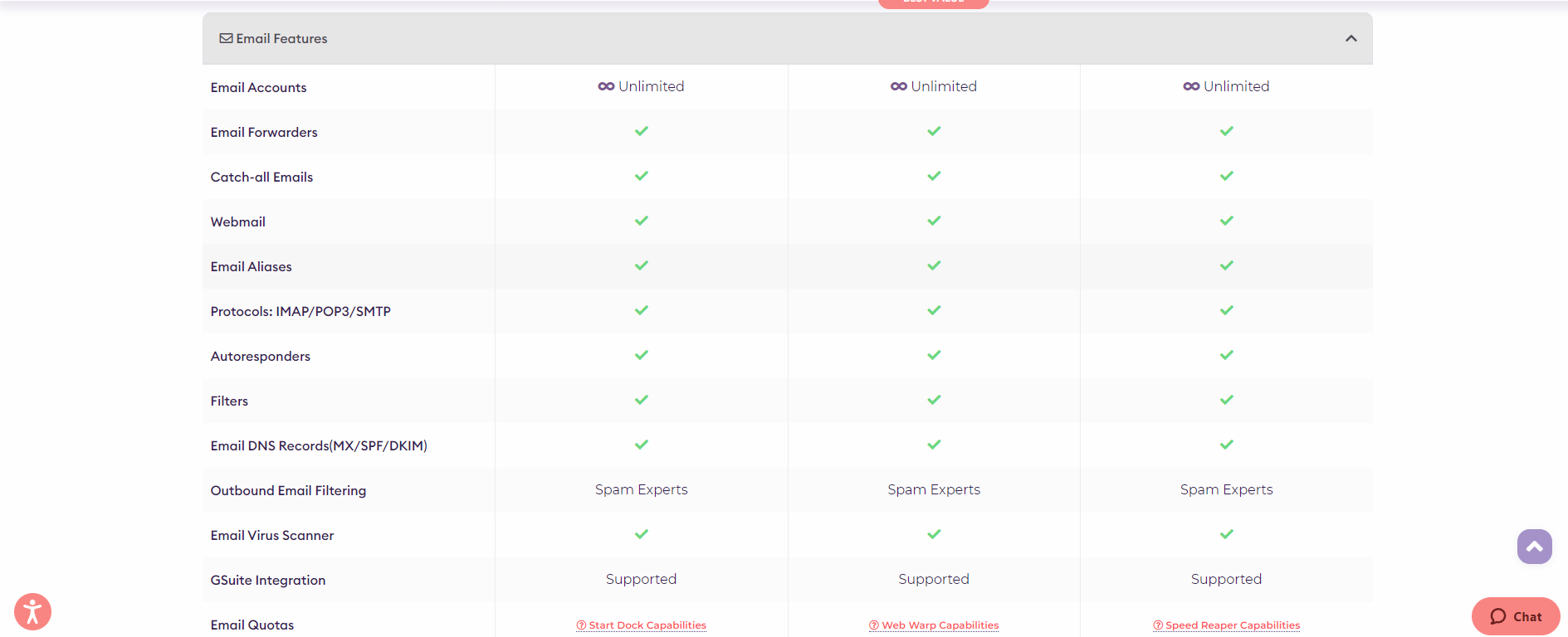
Moreover, we offer website consultations, website restoration after hacks, and a free website transfer.
So, in 2026, we expect those who want to retain their position in the market or grow to start offering additional services as part of their plans. Added value will always play a crucial role in customer decision-making. So naturally, staying behind your competition in this regard is a recipe for disaster.
8. Serverless Hosting
In 2026, Serverless Hosting is set to dominate the hosting landscape, driven by many advantages that cater to the evolving needs of businesses. The serverless architecture offers unparalleled benefits, including instant scalability, faster deployment, cost-effectiveness, and lower latency. Developers experience heightened efficiency and productivity as serverless hosting optimally allocates resources, allowing them to focus solely on coding without the burden of managing servers.
A key advantage of serverless computing is its ‘pay-as-you-go’ model, which offers flexibility and cost-effectiveness. Users are charged based on actual computation usage, eliminating the need to reserve and pay for fixed bandwidth or server quantities. Despite the term “serverless,” physical servers are still utilized, but the intricacies of infrastructure management are abstracted away, allowing developers to focus solely on their code.
This pay-as-you-go model will become a hit in 2026, and it wouldn’t be a surprise if many more hosting companies implement it in their portfolios.
9. AI at the Forefront
Just like in every other aspect of business and life, AI plays a significant role. First and foremost, it’s a great ally in customer support. However, infused with different features, it will make the customer’s website faster, more resilient, and much more secure.
AI will be behind personalized server optimization, helping users use the resources they buy more efficiently.
Moreover, artificial intelligence will find implementations in security features. For example, at HostArmada, we use AI to enhance our customers’ security by implementing it in an Advanced firewall with herd immunity. There, artificial intelligence can detect new forms of attacks based on analytics and data. Naturally, this protects websites not only from known threats but also from unknown ones.
AI’s applications are truly endless. Thus, in 2026, we expect to see many new hosting features utilizing this security and functionality goldmine.
10. Going Green
Finally, we have the one thing that will be a trend in almost any industry – sustainability. Regardless of whether you agree with sustainability practices, as long as customers find them important, the industry will follow suit. Currently, green living is on everyone’s agenda.
So, in 2026, hosting will be going green and sustainable. With 3.7% of all global carbon footprint coming from internet use and supporting systems, this trend is a bit late indeed. Still, it’s better late than never.
This year, an increasing number of hosting companies will participate in eco-friendly initiatives and seek to obtain a Renewable Energy Certificate (REC) or a Carbon Offset Certificate (VER). With customers becoming ever more environmentally aware, hosting companies have no choice but to follow the sustainability trend. So yes, REC and VER will be mandatory in 2026 if hosting companies have growth plans.
How to Choose Hosting Based on These Trends
Understanding trends is helpful, but choosing the right hosting plan is what actually impacts your website’s performance, security, and growth. Here’s how to evaluate providers based on the trends above:
- When shared hosting is fine vs. when VPS is worth it
Shared hosting works well for small business sites, blogs, and early-stage projects with predictable traffic. If you’re running eCommerce, expect traffic spikes, or rely on uptime for revenue, Cloud VPS is worth it for dedicated resources, improved stability, and stronger security isolation. - What “managed hosting” should actually include
Managed hosting should cover automatic updates, server optimization, proactive monitoring, daily backups, security patching, and technical support. If “managed” only means basic support, you’re not getting full value. - What to ask about security before signing up
Ask whether the provider includes a Web Application Firewall (WAF), DDoS protection, malware scanning and cleanup, automated daily backups, off-site backup storage, and proactive monitoring. Security should be layered, not just an SSL certificate. - How to evaluate sustainability claims
If a host promotes green or eco-friendly hosting, look for transparency. Do they provide Renewable Energy Certificates (REC) or verified carbon offsets (VER)? Do they publish sustainability reports? Marketing claims should be backed by documentation. - What AI features are real vs. marketing hype
Real AI implementation includes automated threat detection, anomaly-based firewall protection, performance optimization, and intelligent resource allocation. If the only AI feature is a chatbot, that’s marketing not infrastructure innovation.
Some Final Words
As a business owner, it’s important to stay up to date on industry trends so you can find a hosting company that’s at the forefront of industry changes. Usually, a plan ties you up for at least 2 years. This means researching how forward-thinking the hosting provider is will help you significantly in the long run.
HostArmada is an excellent choice. We implement the latest technologies and equip our clients with the software that can make their websites the fastest, most reliable, and most secure platforms on the internet.
Check out our plans, and don’t forget to familiarize yourself with the vast array of additional features and services we are offering for free. Don’t forget that a great website (that’s you) starts with choosing a great hosting provider (that’s us).
FAQs
Yes. Shared hosting is ideal for smaller websites, portfolios, blogs, and early-stage businesses with steady traffic. It becomes limiting when performance, uptime, or security isolation becomes critical.
Security and cloud-based scalability lead the way. Multi-cloud strategies, Cloud VPS, AI-powered protection, and automated infrastructure management are becoming standard expectations.
If you don’t have in-house technical expertise or don’t want to handle updates, optimization, and security monitoring yourself, managed hosting can save time and reduce risk.
No. Green hosting focuses on energy sourcing and carbon offsets – it doesn’t reduce server performance. Reputable providers maintain high-speed infrastructure while improving sustainability practices.
