

Ecommerce / Monday March 2, 2026
How To Build a Customer Loyalty Program

A customer loyalty program is a structured marketing strategy that rewards customers for repeat purchases and ongoing engagement with your brand. If you want to increase customer retention, boost repeat sales, and build long-term relationships, creating a well-designed loyalty program is one of the most effective strategies you can implement.
Instead of constantly investing in new customer acquisition, successful businesses focus on keeping existing customers engaged and motivated to return. A strong customer loyalty program encourages repeat purchases, increases customer lifetime value, and turns satisfied buyers into brand advocates.
So, needless to say, you need a Loyalty program. Now, let’s talk about what a Loyalty program is, what types there are, and how to build one that will secure all the benefits.
What Is a Customer Loyalty Program?
As the name suggests, a loyalty program is a system that rewards your customers for their loyalty. In essence, you stimulate them to take different actions by offering additional benefits such as discounts, exclusive access to products or services, or other incentives.
Many coffee shops that value their customers offer a stamping card with the promise that every 10th cup of coffee is free. This may sound like a waste of money to some business owners. But a cup of coffee every now and then will pledge you a customer’s loyalty, which is essential for a business in a highly competitive niche, such as operating a coffee shop. This way, you push your customer to disregard convenience and choose practicality. Thus, the coffee shop will retain a valuable customer, who will continue spending with them for at least another 9 coffees.
The rewards are usually based on a point system, where each point gets you closer to the desired prize. The program will increase your sales among your customers without fail, as buyers tend to spend more and make more frequent purchases.
Of course, you are not creating a loyalty program out of the goodness of your heart. You are doing it because it’s highly beneficial to your business in multiple ways.
Why Do You Need a Loyalty Program?
A customer loyalty program is not just a whim. It’s a secure way to ensure your customers stay engaged and come back for more. From the outside, it may look like you are wasting money, but that couldn’t be further from the truth. In fact, you are investing in several benefits that will bring you exponentially more profits in the long run.
Better Customer Retention
88% of customers who feel appreciated will stay loyal to a brand. Additionally, 83% of customers will spend more on a brand they are loyal to. This means that a loyalty program will not only drastically increase customer retention but also increase customer lifetime value (CLTV). Done right, a loyalty program can hook a customer for the long run, make them happier, and build a unique relationship with them.
It’s Highly Cost-Effective
Usually, businesses calculate the customer’s value by subtracting the CLTV from the Customer acquisition cost. Many companies, especially with low-price products, often spend more on acquiring a customer than they gain from a single purchase. Thus, retention is a must. Research has shown that acquiring a new customer is between 5 and 25 times more expensive than providing additional value to existing customers.
Thus, loyalty programs are far more cost-effective than constantly producing ads or brand awareness campaigns. A single discount card will do wonders for customer retention, provided you satisfy the customer’s expectations in the first place.
More Reviews
Customer reviews, as you already know from our dedicated article, are essential to your business’s success. They boost your SEO, impact your sales, skyrocket your credibility, give your products invaluable social proof, and attract attention. So, a customer loyalty program that incentivizes writing reviews will bring significant value for what’s essentially a small gift.
More Customer Referrals
A good loyalty program spreads like wildfire. Your customers will always brag about the great deals they land. Offering them a loyalty reward that makes them feel valued will certainly encourage them to tell their friends and family. Many novice business owners entirely disregard the power of word-of-mouth marketing. However, this type of advertising currently drives nearly $6 trillion in customer spending per year. Not to mention, every person is about 90% more likely to trust a brand recommended by a friend or family member.
What Types of Loyalty Programs Are There?
There are several types of loyalty programs, each one best suited to different types of products and services. Naturally, the loyalty program type you choose depends heavily on your desired outcome.
Point-Based Programs
By far, it is the most common type of loyalty program. Its cost-effectiveness is unparalleled, as customers receive points for every purchase. This means they get rewards based on how much they have already spent. After the loyal customer has acquired some points, they can exchange them for a reward. Typically, the rewards are freebies, discounts, or exclusive experiences and offers.
Most often, these points have an expiration date. Naturally, this incentivizes customers to spend more in a predetermined period. For example, you can offer a 90% discount on Black Friday to customers with 100 points. If they get 10 points for every 100 dollars spent, they will have to pay 1000 dollars to earn the 90% off reward. Of course, don’t take this example point-blank. As you will see in a bit, building a successful loyalty program strategy needs more than copying a template.
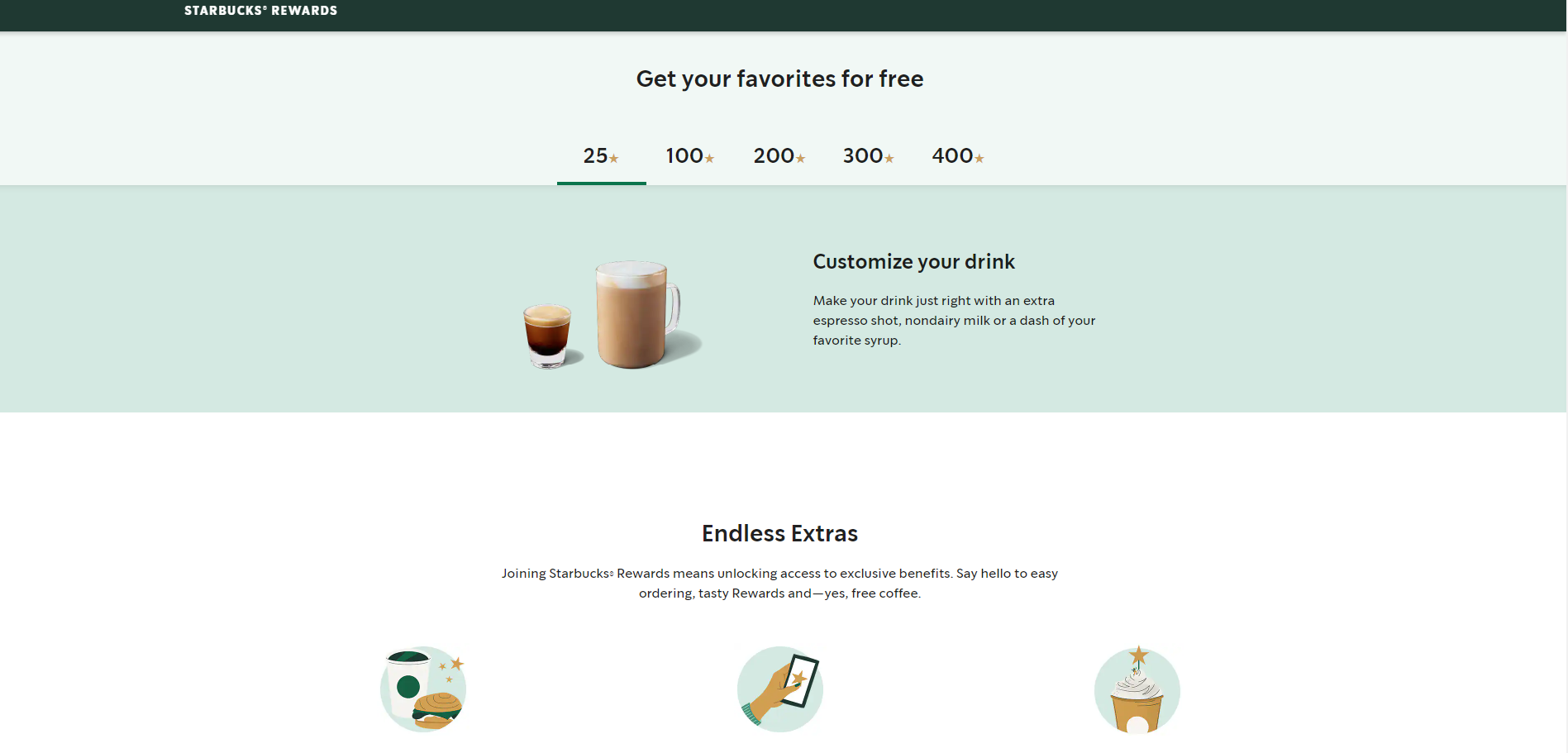
Starbucks is an excellent example of a point-based program. Their customers earn points (“stars”) for various actions, such as purchasing food or drinks, installing their app, or participating in special activities. Once they get enough points, they can exchange them for a free drink, some food items, priority in mobile ordering, and even a free birthday drink.
Tier-Based Programs
This type of program divides customers based on their purchasing habits. For example, if someone buys your product 3 times a month, they get into the first tier. If they purchase it 6 times, they move to the second tier. For nine or more purchases, they go to tier three. Naturally, each tier offers exceedingly more lucrative benefits. For example, tier one may receive a 10% discount, while tier two receives a 25% discount. Tier three, in this case, will receive 40%. This way, you incentivize your customers to spend more regularly on your products.
Hotels and airlines most often use this strategy. They successfully implemented several tiers. Marriott Bonvoy, for example, offers six tiers of loyalty benefits. The first one is the basic benefits, like free Wi-Fi and point earning. The second one offers Bonus points, room upgrades, and early check-in/late checkout. The highest sixth tier offers the first- and second-tier bonuses plus lounge access, a complimentary continental breakfast option, personalized welcome gifts, guaranteed Platinum upgrade, and bonus points on all eligible spending and all bonuses from previous tiers.
Cashback Program
This program is often associated with credit cards and other banking and financial services. However, it can be implemented in various other niches. This loyalty program aims to push customers to reach a certain spending level.
For example, if you spend 200 dollars, you will get 10% back. This means that the customer will actually spend 180, but if the average spend before the loyalty program was 150 dollars, that’s a 30-dollar increase in your revenue. As you can see, this is a great way to boost your customer value. To top it all off, you can give the cash back as a gift card, which will ultimately end up back with you.
Rakuten’s loyalty program is a great example. The program offers cashback percentages on purchases made through their platform at thousands of partnered retailers. Users earn cashback simply by clicking through the Rakuten website or app before making a purchase at selected stores. Essentially, they offer immediate value through tangible cash rewards, cater to the convenience of online shopping, and provide a seamless user experience. Most importantly, they offer a passive reward to customers using their platform by giving them back a percentage of their spending as PayPal credit or a gift card.
Paid Program
This program requires people to request to join and actively pay a subscription fee. As you can imagine, this program must give exceptional additional value to customers; otherwise, they will simply disregard it. Naturally, the benefits of such a loyalty program should be on par with the payment.
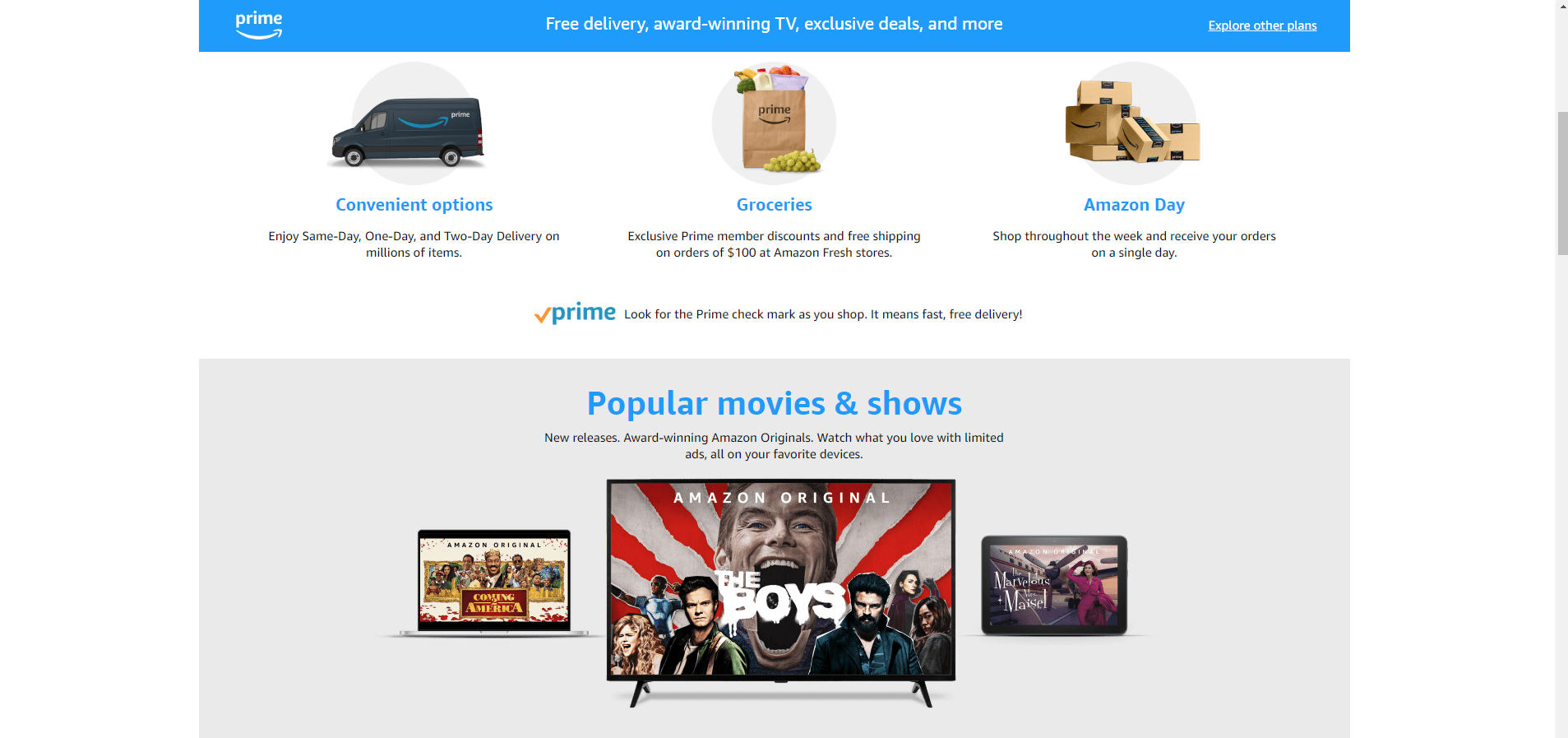
Amazon Prime is a great example. The annual subscription is quite expensive, currently at about $140. However, it offers some pretty sweet benefits to the users. They offer free two-day shipping, free same-day delivery, free release-date delivery, free no-rush delivery, or the option to choose a weekly delivery day. Moreover, loyal customers get streaming services, free music, and games, along with the opportunity to borrow ebooks and audiobooks from a rotating selection of titles, unlimited photo storage, exclusive deals, and so much more.
So, if you are going to use paid programs, you’d better make sure the deal is lucrative enough.
Coalition Programs
This program is ideal for those who operate in more than one niche. This way, you can offer points that the customer can redeem at various locations. For example, if you provide boilers, furniture, carpets, woodwork, and other home decorations, a purchase in one of your businesses can translate into a discount at any other location. This will promote your other businesses and make sure a client won’t stray from your reach, regardless of their needs.
This can also be done as a collaboration among various small businesses aiming to boost their customer base.
Gamified Programs
The gamified programs use game mechanics, such as points, badges, and leaderboards, to motivate customers to engage with the program. Casinos and retailers most commonly use those types of loyalty programs. You can add a simple game, like spinning the wheel, with rewards based on what you get. It actually enhances the customer’s engagement and experience, which is a win-win.
Though there are other types of loyalty programs out there, these are the basic five most commonly used and have a proven track record of success. Regardless, creating a unique loyalty program is not out of the question. On the contrary, building a great loyalty program requires a healthy dose of innovation. But before you get there, you must still follow the 10 steps of creating a genuinely astounding loyalty program.
How Do You Create a Great Loyalty Program?
Creating a successful loyalty program is not easy. It requires time, tests, and, above all, a lot of data and analysis. So, let’s start from the very top.
Be Creative With the Name
This may sound like a dumb place to start, but the name of your program is everything. If you think about it, every loyalty program has a great, brandable, and catchy name. It’s the flagship of your brand. It’s the place where your loyal customers will gather. So, take your time and try to come up with a catchy name with a dose of humor that represents your brand, style, and values. Also, try to add some powerful words, like exclusive, royal, and ambassador. Naming your loyalty program simply “Brand name loyalty program” shows a lack of imagination. Thus, even though your benefits may be great, you will miss the opportunity to get even more customers.
Analyze Your Customer’s Behavior
Well, the name might be the most important aspect, but a close second is who you will be targeting with this loyalty program. You need to know your customers inside and out. You must understand what drives them to purchase, what makes them hesitate, what is most important to them in their customer journey, and how you can improve their experience with a loyalty program.
For example, you need to know your average CLTV, how much a customer spends on a single purchase, at what stage of the customer journey they are ready to purchase, what their feedback is, and whether it was an impulsive purchase or a calculated one. Answering all these questions and more will give you invaluable insight into your customers’ behavior and how to manipulate their actions with your loyalty program.
Define the Program’s Goals
Next, define the goals of the program. Just like with anything else, the point of loyalty programs is to enhance your business in some way. So, determining the goal is the cornerstone of creating a successful campaign that delivers.
One of the most common goals of a loyalty program is to increase CLTV. However, there might be other aims as well. For example, you might want to boost your credibility by receiving more reviews. Or you might want to increase the average amount spent per single purchase. You can even aim to generate more money for charity. Defining your goal will help you make the right decisions for the rest of the points on this list.
Choose the Loyalty Program Type That Fits Your Business
Once you have done your homework, it’s time to decide on your loyalty program type. Now, you can mix and match all sorts of types or come up with a unique way to engage your loyal customers. Still, make sure your loyalty program fits your business and your customers’ expectations. For example, a paid loyalty program on an e-commerce brand offering second-hand products is not customer-friendly. If someone is willing to buy a second-hand item, they clearly don’t have excess money to spend. So, instead, give them a cashback, which will be far more valuable to them.
Personalize the Loyalty Program
As we’ve discussed multiple times in our 2024 trends series, personalization will be huge. So, naturally, the same goes for loyalty programs. For example, if a customer is interested in a particular sport, like skiing, personalizing their loyalty program will lead to much higher interest. You can even add a loyalty reward tailored to their hobby.
For example, “Share a picture riding your [brand name] ski on your favorite slope, tag us, and get a 25% discount on your next purchase”. This will enhance the customer’s loyalty, boost your popularity, and drive your word-of-mouth marketing to new heights.
Add a Variety of Rewards Based on Actions
Though your loyalty program has a primary goal, that doesn’t mean you can’t aim to cover other aspects of your business. So, make sure your loyalty program rewards your customers for more than just purchasing. For example, give a special reward for downloading your app. Give another reward for leaving a review or bringing a referral.
Also, make sure you offer a variety of rewards. Earning just loyalty points can become boring over time. You don’t want that. You must keep your customer’s hype constant. So, it’s a good idea to add special occasions when loyal customers can earn an experience, a special offer, or anything else that will enhance their enthusiasm for participating in your loyalty program.
Make Loyalty Points Valuable
This should go without saying: if you want your customers to join your loyalty program, you must make it valuable. You can’t offer just a smile on the radio in exchange for their loyalty. Your customers must receive a noticeable reward. Only this will incentivize them to continue choosing you over your competitors.
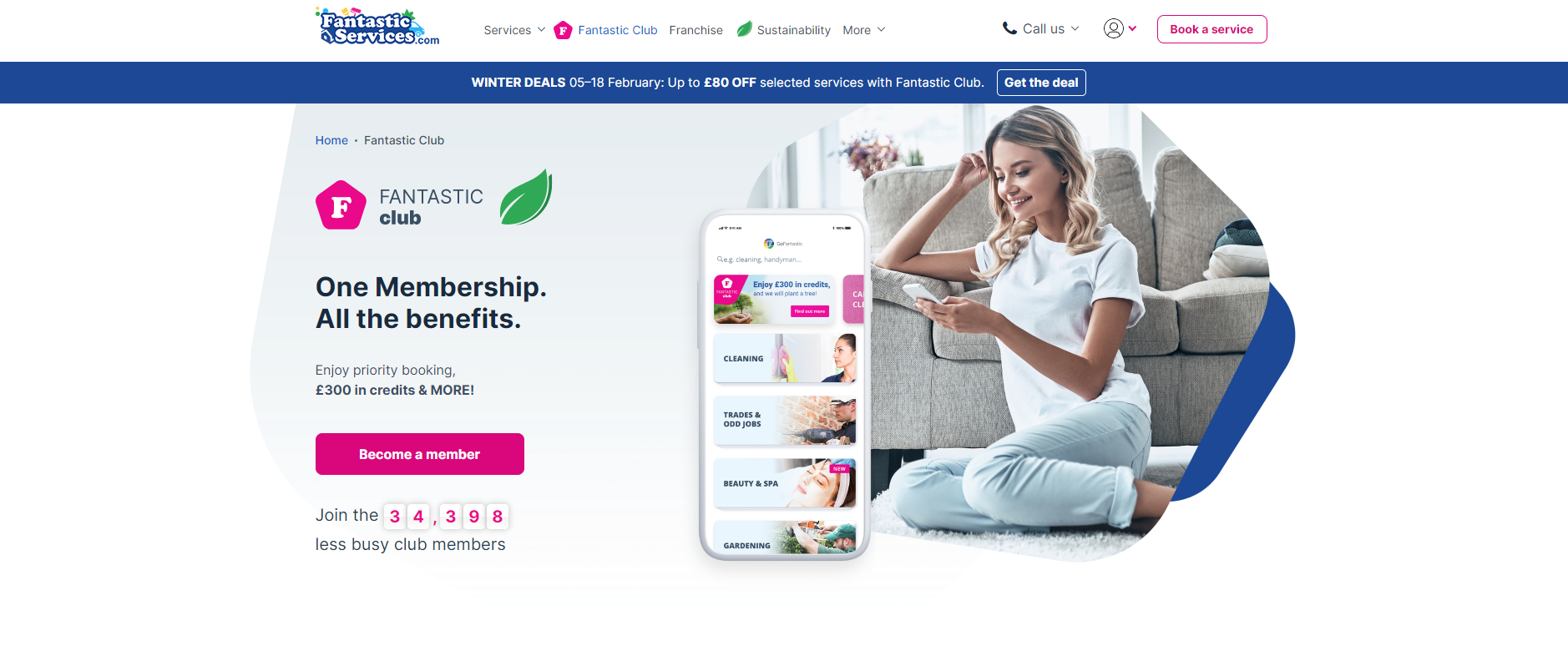
Naturally, using a cashback system is the most straightforward way to show the value of each purchase. But if you choose points as your currency, make sure to clearly state the value of each point. This way, your customers will know what they have and how much you are willing to give back.
Go Beyond Monetary Value
With Gen Z becoming the driving force behind the economy, the entire conversation with the customers will shift toward values. While previous generations were attracted to the best deal, the most cost-efficient choice, and all sorts of discounts, brand values are the driving force for Gen Z. This holds true for loyalty programs as well. Today, around 66% of customers are adamant that brands should have a social stand and join in the conversation of social and political topics.
So, make sure to go beyond monetary value with your loyalty program. Add a cause that your customers can stand behind. Identify a social cause your customers feel strongly about and give them the opportunity to join your efforts in solving the problem. For example, you can create a program where a percentage of each loyalty program customer’s purchases goes to a particular charity. Or you can take a hands-on approach and invite your loyal customers to plant trees at certain points.
Don’t Put Strong Barriers
Placing barriers to entry for someone to join your loyalty club is not ideal. Still, if you want to claim that the club is exclusive, some sort of barrier is a must. However, even if you do put some barriers, make sure they are almost transparent. Loose barriers will retain the notion of exclusivity but won’t deter customers from joining in. For example, if your customers spend, on average, $150, don’t set your cashback goal to $500. The cashback scheme aims to push your clients to get 1 or 2 items on top, not to bleed them dry. So, make the target price 180 or 200 dollars. This way, you will convince more than a few customers to raise their spending on your website.
Make It Engaging
A loyalty program is only as good as it is engaging. After all, the main point of this system is to encourage users to engage more with your business, so it stands to reason to make the loyalty program contingent on their actions.
For example, you can ask your customers to complete a task in your app every day to earn more points. Or offer special discounts to visitors who visit your website for 7 consecutive days. You can give bigger rewards to people who share your brand on social media.
The only thing you need to follow is giving your customers something to do, preferably every day. The more they spend with you in their mind, the higher the chances they spend their money on your website.
Common Loyalty Program Mistakes to Avoid
Even the best intentions can fail if a customer loyalty program is poorly structured. Avoiding common mistakes will help you protect your margins while delivering real value to customers.
Overcomplicated reward structures are one of the biggest pitfalls. If customers need a calculator to understand how many points they earn or what those points are worth, engagement will drop. Keep the earning and redemption process simple, transparent, and easy to explain in one or two sentences.
Another common issue is offering rewards that are too hard to redeem. If customers must spend an unrealistic amount before qualifying for a benefit, they may lose interest. Make sure rewards feel achievable and motivating within a reasonable timeframe.
A lack of clear value communication can also hurt performance. Customers should instantly understand what they gain by joining your customer loyalty program. Clearly highlight benefits on product pages, checkout screens, and account dashboards.
Many businesses also make the mistake of ignoring the mobile experience. Since a large portion of purchases happens on mobile devices, your loyalty dashboard, rewards tracking, and redemption process must be fully optimized for smaller screens.
Finally, failing to track performance metrics can prevent long-term success. Monitor participation rate, repeat purchase rate, customer lifetime value, and reward redemption rate. Continuous measurement allows you to refine your loyalty strategy and maximize ROI.
What Else Do You Need?
Knowledge is indeed the cornerstone of creating a robust and successful loyalty program. But, of course, knowing how to build it is only the first pillar in this endeavor. A good loyalty program must have a fast, secure, and reliable infrastructure behind it. Otherwise, your efforts will simply fail.
HostArmada is the perfect choice for anyone looking for the ideal infrastructure for their website and loyalty program. Our hosting services offer lightning-fast speed, robust and proven security features, and a 99% up-time guarantee policy. Check out our plans, and choose the one that best fits your needs. And don’t forget, a robust, secure, and fast hosting infrastructure is behind every successful online business.
FAQs
There is no universal “best” option. The right customer loyalty program depends on your business model, margins, and audience behavior. Ecommerce brands often benefit from point-based or tiered systems, while subscription-based businesses may prefer paid membership programs. The most effective structure aligns with your pricing strategy and provides clear, consistent value.
The cost of a loyalty program varies based on rewards, software tools, and promotional efforts. Many businesses allocate a small percentage of revenue (for example, 2–5%) toward rewards and incentives. The key is ensuring that increased retention and customer lifetime value outweigh the program’s operational costs.
You can measure success by tracking metrics such as repeat purchase rate, customer retention rate, customer lifetime value (CLV), redemption rate, and average order value. Comparing these metrics before and after launching your customer loyalty program will help you determine its overall impact on revenue and long-term growth.
