

Marketing / Friday February 6, 2026
Top 12 Golden Rules for Writing a Winning Homepage Copy

Visitors land on your homepage with a simple goal: to quickly understand what you offer and whether it’s relevant to them. Your homepage copy plays a critical role in shaping that decision within seconds.
Writing effective homepage copy isn’t just about clever wording or catchy headlines. It’s about clarity, structure, and understanding how users read, scan, and evaluate information. Small, often overlooked details can make the difference between a visitor staying or leaving.
In this article, we’ll explore 12 unspoken rules of writing winning homepage copy – practical principles that help communicate value clearly, build trust, and guide users toward action.
1. Put The Solution Front And Center
That’s hardly something you couldn’t figure out on your own. People are looking for a solution. They are not looking for a product or a service. So, putting your product front and center will always fail. No one is interested in your brand’s name, what you think of your product, or a personal greeting or thank you note.
For example, check out Tim’s Landscaping Telford website.
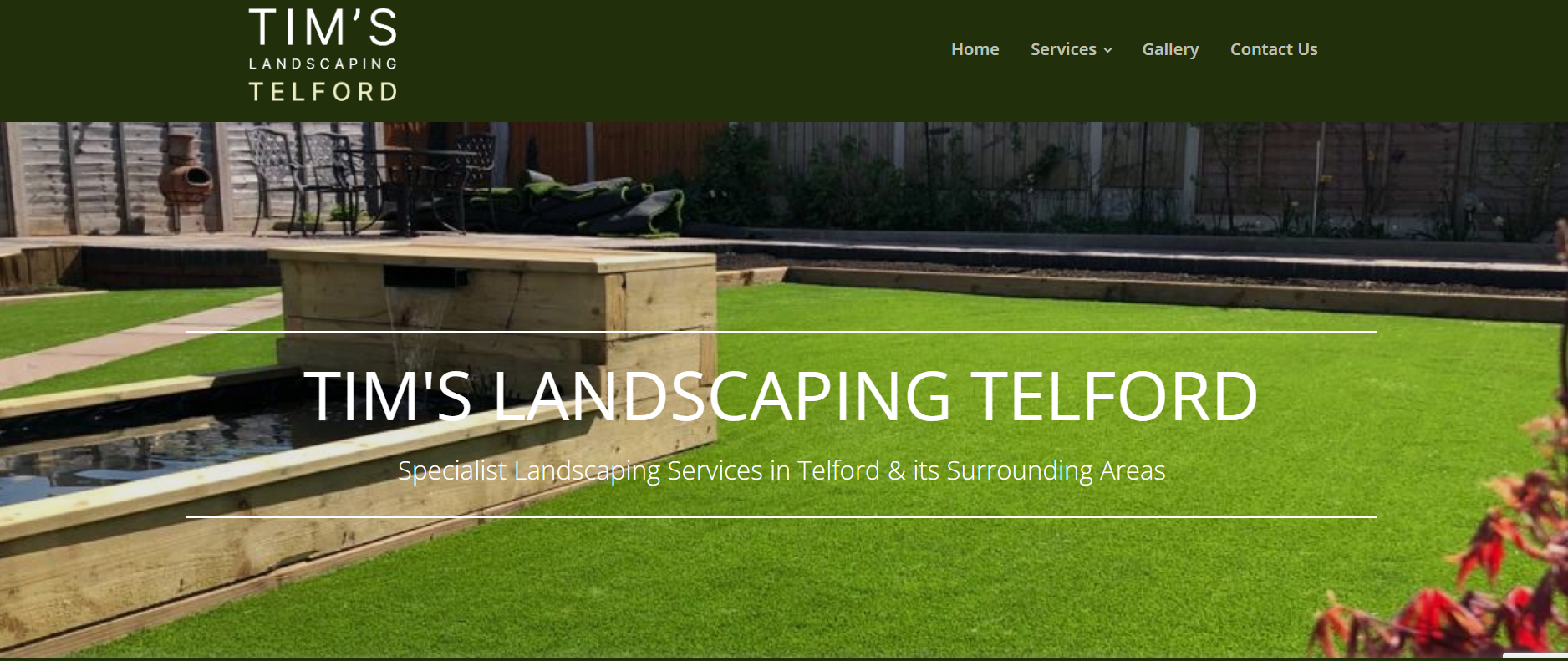
Sure, the H1 here gives some basic information, like the industry and the region it serves. However, that hardly draws attention. Moreover, the subheading provides the exact same information. There is no solution. For example, an H1 like “Make your lawn the envy of the neighborhood” speaks far more to the customer’s desires. After all, this was the reason they looked for a landscaping company. If they simply wanted to get their grass cut, they could have paid any of the neighborhood children.
However, that’s not the worst headline you can muster. Sharpie, for example, crashes and burns far more spectacularly in their attempt at an original H1. Check out this Heading section:
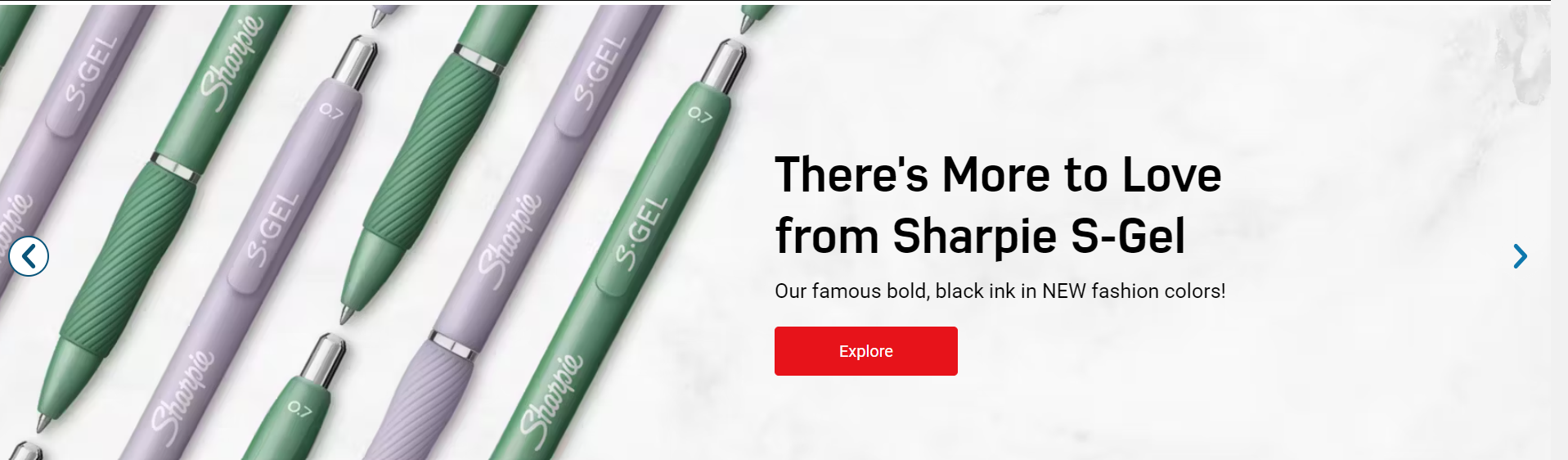
Sure, Sharpie is a well-known brand that can afford a bit more vague headlines, but still, this heading is simply horrendous. It gives absolutely no information about the brand, the product, or what problem it solves.
Now, this version, on the other hand, provides precise answers for people who might be interested in the product. It shows that the product works on almost any surface, and the subheading reinforces this.
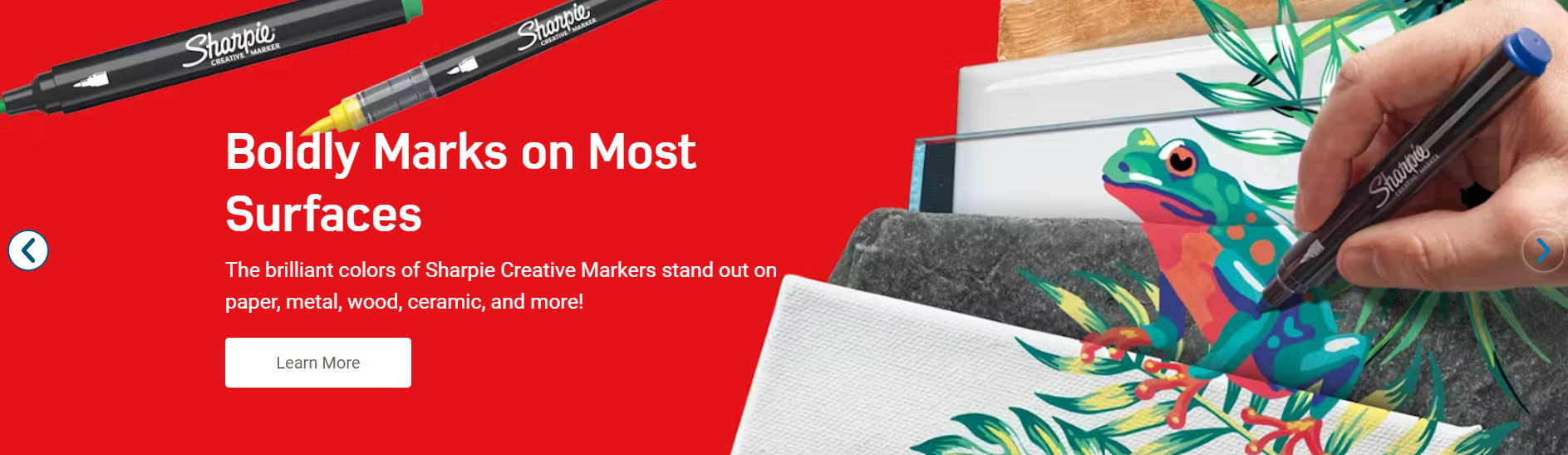
So, when writing your headline, make sure to explain how your product or service will solve the user’s main problem and satisfy their deepest desires. That’s the key to success.
2. Keep Your H1 Concise
The headlines should be short and sweet. The role of your headline is not to convince but rather to impress and draw attention. To make it perfect, keep it as short as possible and never exceed 60 characters (including spaces and special characters). 60 characters may sound a bit arbitrary, but that’s the limit Google uses to show in its search results. Naturally, you’d want your entire message to be visible when someone stumbles upon your page in Google’s search results.
But Google’s using this number for a far more common reason. People don’t want to read novels to understand what your website is about. They are looking for a solution and have plenty of options on their browser.
Usually, when a user is searching for an answer, they open 5-10 tabs at a time to find the best solution for their needs. Naturally, they don’t want to spend more than a few seconds on them if they don’t offer a suitable solution. So, writing a long and heavy headline is counterproductive. It’s like someone entering your bakery and asking whether you offer gluten-free croissants. You won’t start telling them your secret recipe and where you get your products. You will give them a straight answer. That’s precisely what you should do when writing your H1.
To be most effective, focus on a single benefit that will draw the most customers. For example, if you offer gluten-free pastries from a local farm and use natural ingredients, those features will attract more attention.
So, focus on a single selling point and represent it as straightforwardly as possible in your headline.
3. Show Confidence and Knowledge
Now, there are those who will tell you to avoid sounding smart. That hardly makes sense if you want to be an authority in your industry. Sure, you mustn’t use overcomplicated terms and industry-specific lingo, but that doesn’t mean you shouldn’t show off your expertise. On the contrary, that’s precisely what you must be doing.
The main goal of your homepage is to inspire trust and credibility. So, showing confidence and knowledge will take you a long way. Luckily, that’s not that hard. All you need is the right words and to avoid some commonly used parasitic phrases.
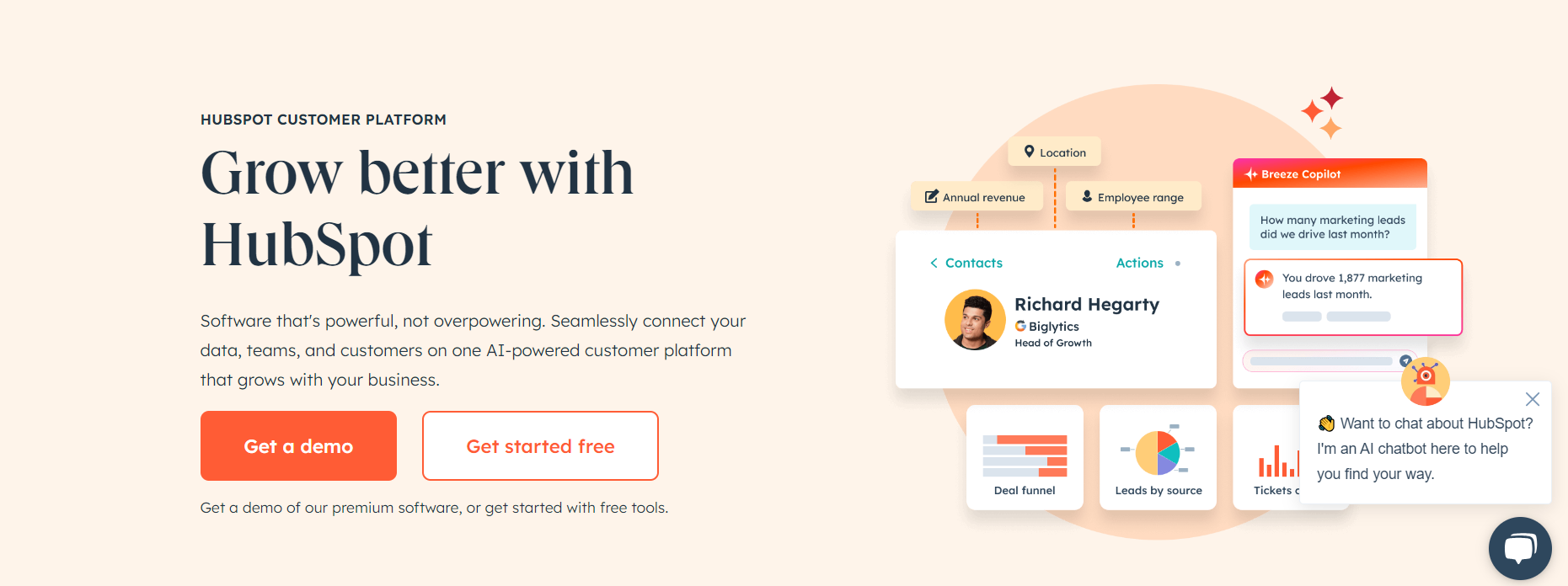
First and foremost, forget about words and phrases that show doubt. For example, which sounds more confident:
- A: This should solve your problem
- B: This will solve your problem
The difference is quite minimal, indeed, but it shows that A has some doubts about the outcome. “Yeah, it should work, but it might not.”
B, on the other hand, is certain of the outcome. “It will work. If it doesn’t, the problem is elsewhere, not in what we were fixing until now.”
The same goes for parasitic phrases like “In my opinion.” This phrase is usually used by interns who are afraid their manager will yell at them for a mistake. You are not an intern; you are an expert. You don’t express opinions; you talk in terms of facts. So, stand your proverbial ground and show some confidence in your opinions. Use the right words to convey your confidence and knowledge.
4. Don’t Underestimate The Word’s Meaning
Speaking of words, those have a meaning, you know. Yes, you probably have noticed that any word we use translates certain information. For example, when you tell your friends you are hungry, you give them the information that you need sustenance. However, if you tell them you want pizza, you give away far more information. You are not just hungry; you are hungry for a specific food, and not just any dish will do. To translate this into marketing terms, using precise language will save space and convey your message more effectively than using a synonym.
One of the most common mistakes business owners make is using the phrase “will give you the chance…” as a synonym for “allows you to…” or “gives you the opportunity…” At first glance, the three can be used interchangeably, but unfortunately, they convey completely different subtexts.
“Gives you the chance…” implies uncertainty. You won’t receive the desired outcome, but you will have the chance to get it. But it’s not up to you. That’s what “chance” is – an event or circumstance outside your control.
The subtext “Allows you to…” implies that you, as a provider, have full control over the outcome. If they get your permission, you will allow them to solve their problem. It’s a done deal. They don’t have to do anything more than just get your blessing. For example, “Subscribing to our paid service will allow you to get twice as fast service.” There’s no additional action needed here.
Finally, “gives you the opportunity…” implies that the product will only assist in the solution. Still, the outcome depends entirely on the user’s subsequent actions.
So, choose carefully the words you are using. They have a strict subtextual meaning, which can make or break your entire copy.
5. Use Powerful Words
There’s another thing about words. Some of them evoke a more emotional response from users than others. These are the so-called powerful words. They don’t just convey information but also emotion.
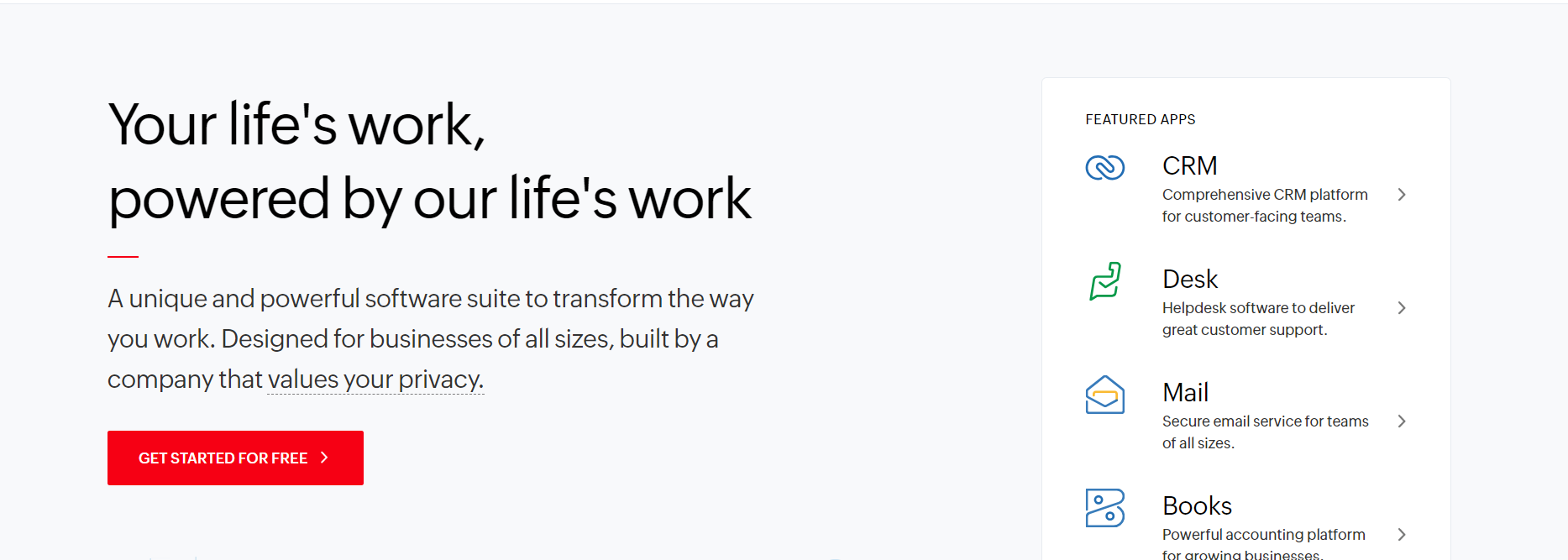
For example, if you tell someone that their favorite team lost the game, they will get the memo. They played, they lost.
However, if you tell them, “Your team got devastated,” this adds an additional emotional toll.
In marketing, emotions are your friends as long as you know how to work with them. You need to carefully consider when customers should feel strong emotions and when they should be clear-headed.
Powerful words instantly draw attention and arouse an emotional reaction. For example, the phrase “…with a beautiful design” conveys that the product is objectively beautiful. However, “… with a majestic design” adds a touch of pride and highlights the product’s nobility. It conveys not only that the product is beautiful but also that you will be proud to use it.
However, don’t overuse powerful words. For example, using them in the headline is fine, as you want to draw the user’s attention and provoke an emotional response. However, in the offer section on your homepage, you’d like them to make a more level-headed consideration of whether your product will meet their needs.
6. Never Start With A Negative
The subconscious effects of words can truly bring you a long way. Using specific words can establish the user’s mood throughout their stay. Thus, using negative words at the beginning of sentences, especially in the headline, CTAs, and the offer section, is a huge no-no. That doesn’t mean you must avoid these negative words like the plague. It simply means not using them to start a sentence.
Negative words can affect the user’s overall demeanor and, naturally, their experience. Moreover, they will instantly become much more reserved and disagreeable due to their intuitive defensive coping mechanism. Usually, when you are in a negative setting, you become far more distant and defensive, ready to leave.
On the contrary, in a more welcoming and positive environment, users are far more agreeable, open to conversation, and ready to purchase.
Now, avoiding the obvious negative words is easy enough. However, you must also avoid words that are perceived as negative. These can be quite obvious, like “debt,” “fear,” “mistake,” “regret,” “guilt,” “problem,” “failure,” and others.
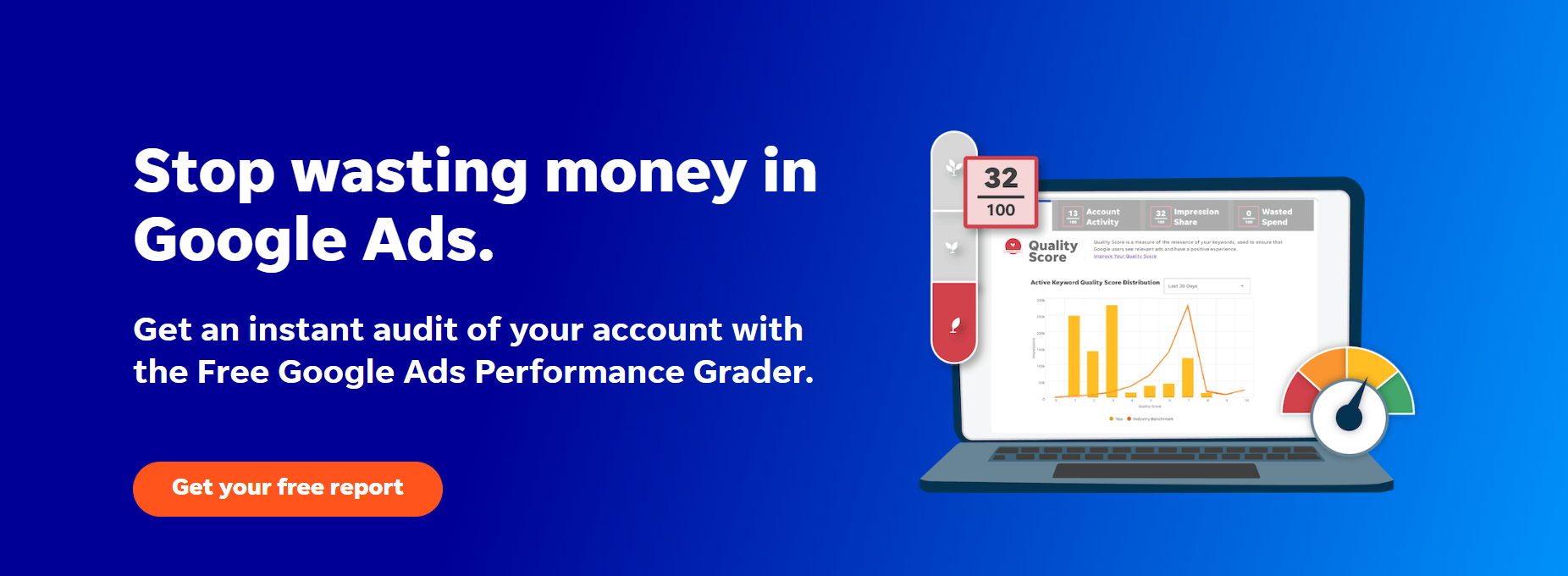
But they can also be as innocent as “forget” or “never.” These two are most often used in copywriting. You’ve most likely heard the famous “Forget about [add problem] with [Brand].” Yes, that gives your product a negative impression. So, instead, give it a positive spin. For example, instead of “Lose weight with [product],” go for “Gain confidence by losing weight with [product].”
Always keep your audience positive and happy. This is your main goal with your UX, color choices, and images. So, why should words be any different?
7. Numbers Are Your Friend
There is a joke: “93% of people believe in fake statistics.” Yeah, it’s not the best one out there, but it perfectly illustrates the point we’re trying to make. People believe in numbers. They are convincing, credible, and, more often than not, easy to check. Moreover, they grab attention, make your page more scannable, and are often what users subconsciously look for.
Indeed, users are drawn to numbers, mainly because when they look for a product or service, they want to know the price.
Still, numbers are far more meaningful. They offer clarity and specificity. For example, “We have many happy customers” doesn’t have the same ring as “We have more than 10,000 happy customers.”
Furthermore, it gives users the impression that you’ve done your research and offer factual, well-researched numbers.
And then there is the visual component. Numbers are vastly different from letters. So, they instantly draw attention. For example, if I list some numbers
- one
- two
- three
- 4
- five
- six
- 7
- eight
- night
- ten
Which are the first two numbers that caught your eye?
So, whenever possible, use numbers and percentages. However, avoid numbers and numerical symbols when you’re seeking an emotional response. Like in the headline, for instance. Numbers, unfortunately, are factual agents, so they will undermine your effort.
8. Use The Power Of Three
Speaking of numbers, you can use numerology in more than one way. For example, you can use the power of three as a persuasive copywriting trick. The power of three has never been proven scientifically, but empirically, it works wonders.
The Power of Three is a writing principle rooted in the idea that information presented in groups of three is more satisfying, effective, and memorable for readers.
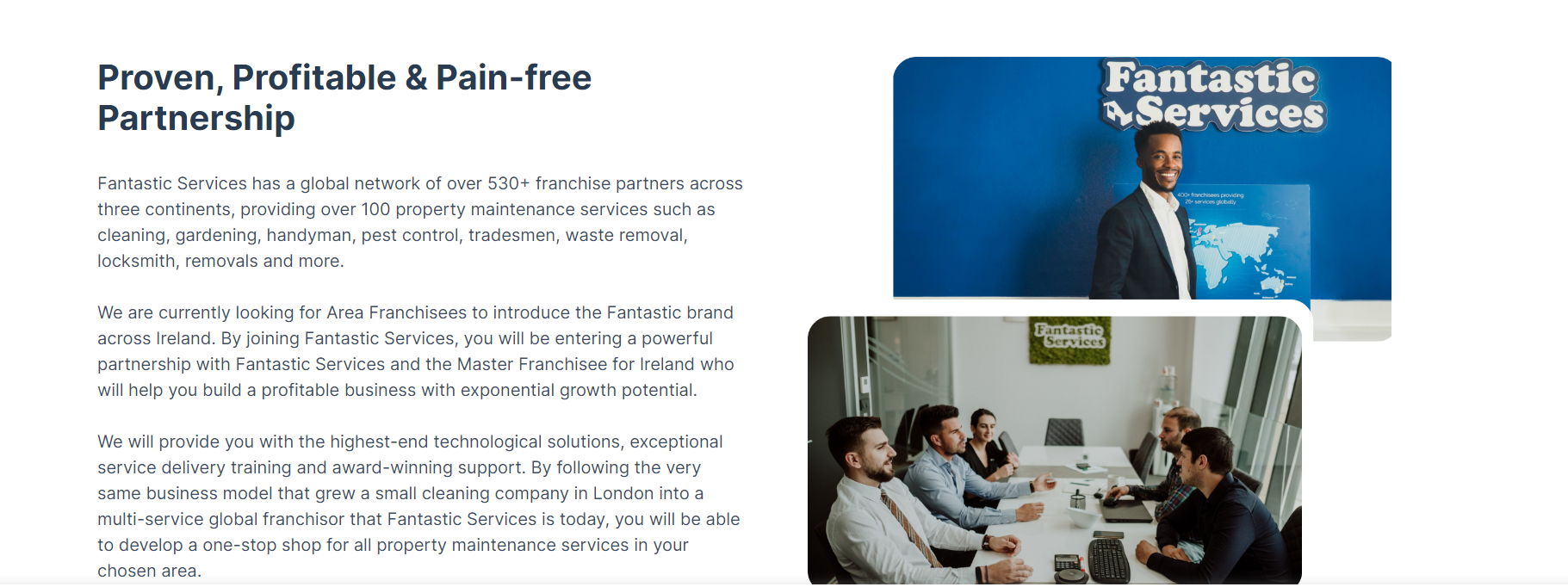
In practice, adding three adjectives to a noun will make the statement far more believable and attractive. For example,

This concept is most often used in headlines and CTA’s, but it can help you wherever you want to draw additional attention and confirm a specific idea.
9. Words Draw Attention Better than Images
Speaking of drawing attention, there are more linguistic tricks that can help you do it far better than any color or image.
Among the most common methods is the Rhetorical Question. With this method, the copywriter asks a question without expecting an explicit answer from the reader. The point is to engage the user with the question and instill the idea. This method is most often used in CTAs or headlines, such as:
“Are you ready to change your life?”
“Why settle for less?”
The Juxtaposition presents two contrasting or unexpected comparisons that instantly draw attention and stick in the user’s mind. “Luxury that’s affordable” is a great example.
One of the less-used but extremely effective linguistic tricks is alliteration. Alliteration is the repetition of consonant sounds at the beginning of words. This creates a specific catchy rhythm that sticks in the user’s mind.
Anaphoras are also a great way to capture the user’s attention, but they have a bad reputation due to Google’s helpful content guidelines. An anaphora is the repetition of a word or phrase at the beginning of successive clauses or sentences. It emphasizes a concept and adds a poetic rhythm.
“Every day. Every hour, every moment.”
However, Google is not a fan of three consecutive sentences starting with the same word, so many copywriters forsake this method of drawing attention.
Regardless of the method you choose, this is a great way to make your message memorable and catchy.
10. Mimic Authentic Speech Rhythm
While using these linguistic methods is excellent for directing attention where it’s needed, you shouldn’t make your copy hard to read. Sure, it must be emotionally heavy where it matters, but it should also be relatable. It would help if you didn’t sound like a snob.
That’s why your copy must mimic your audience’s authentic speech rhythm. In other words, make it sound as if you’re talking to your audience at a pub. Use the same speech patterns. For example, the offer section, “Our tool will enhance your overall productivity while supplementing your team’s work-life balance,” will sound pretentious, unrelatable, and instantly lose any user. Instead, go with “Get more done for less time, without burning out. [Product] will do it for you.” You can feel the difference yourself.
So, try to speak to your customers as they speak to each other. Sure, be the smartest guy in the room. That’s the point. You are giving the solution. But, as the smartest guy, you also must know how to communicate with your peers. And yes, considering them your peers will take you a long way.
11. The First Draft Is Always Bad
Finally, you’re ready with the copy. But don’t be so hasty. This was only the first draft, and practice shows that the first draft is always bad. It lacks the refinement it needs to shine. You need to polish it, check the emotional triggers, enhance the flow, and consider whether the customer journey is precise.
The first draft is gathering your thoughts. You can’t expect it to be perfect. It never is. You need to sleep on it, consider the possibilities, review each word again, and see if another term won’t convey the message better.
Usually, to produce excellent copy, a copywriter goes through at least three drafts before finishing a project. So, even if you’re better than a professional copywriter, these practices are there for a reason.
More importantly, give yourself at least a few hours between reviewing your work. If you can spare an entire day – even better.
12. You Won’t See All Your Mistakes
Finally, when you are satisfied with your copy, you must find a second set of eyes to look through it. You have been working on this text for so long that you will no longer see obvious mistakes. Sure, some tools like Grammarly can help you, but they often miss some obvious errors. For example, instead of “spare,” you might have written “spear.” That’s a fair mistake, but it’s one that Grammarly or any other tool won’t flag.
So, make sure to ask a second set of eyes to go through your text and mark all the mistakes you’ve made. And yes, there will be mistakes.
If you have a third set of eyes – even better.
One more thing
Finally, when your copy is ready and online, there is the small matter of reaching the public. Now, you may have the most brilliant copy in the world, but if your hosting infrastructure fails, all your efforts will be for nothing.
HostArmada is here to prevent that from happening. We offer lightning-fast speed, state-of-the-art security, and a 99.9% uptime guarantee (See an enhanced version of the “power of three” concept). With our infrastructure behind you, your copy will reach its full potential and help you achieve fast, steady growth.
So, before you plunge into the copywriting rabbit hole, ensure your website is ready to receive all the new traffic your brilliant copy will bring. Check out our plans and choose the one that best suits your needs.
FAQs
Effective homepage copy clearly communicates the main value proposition, addresses the visitor’s primary problem, and builds trust through clarity, confidence, and relevance. It focuses on solutions rather than features and guides users toward the next action.
Homepage copy is often the first interaction users have with a brand. Strong copy helps retain attention, reduce bounce rates, and increase conversions by clearly explaining what the business offers and why it matters to the visitor.
Homepage copy should be concise but informative. Headlines and above-the-fold content should quickly communicate the core message, while supporting sections can provide additional context without overwhelming the reader.
Common mistakes include focusing too much on the brand instead of the user, using vague or generic language, overloading the page with information, and failing to clearly explain the main benefit or solution offered.
